
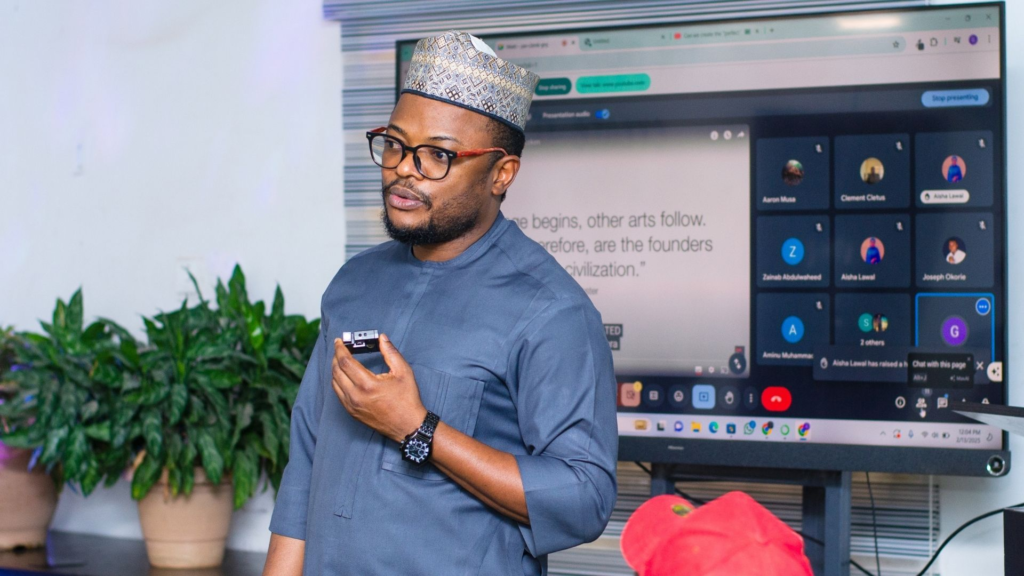
There is a room I want you to imagine. It is an evening in Lagos. The air is electric, not just with the humidity that the city is famous for, but with something harder to describe: momentum. In that room sat Nigerian startup founders building solutions in HealthTech, FinTech, AgTech, web3, creative technology, logistics and climate innovation. Across the table sat European partners, investors, and ecosystem builders; people who had made the journey not as tourists, but as believers.
What happened in that room, the EU–Africa Startup Roundtable, was not just an event. It was a signal. A signal that the relationship between African innovation and European partnership has moved from conversation to commitment.
The Nigeria story: Numbers that demand attention
Nigeria is Africa’s most active startup nation by deal volume. In 2024, Nigerian startups raised $520 million in funding, accounting for 22.5% of all African equity deals and 16% of the continent’s total startup funding. The country has produced five unicorns: Flutterwave ($3 billion+), OPay ($2 billion), Moniepoint ($1 billion+), Jumia, and Maser, with a combined valuation exceeding $9 billion. Moniepoint’s $110 million Series C in October 2024, backed by Google’s Africa Investment Fund, Verod Capital, and Lightrock, validated a company that is now processing over 800 million monthly transactions worth more than $17 billion.
At the roundtable, Nigerian founders demonstrated exactly this depth. A HealthTech founder presented a telemedicine platform reaching patients in communities where the nearest hospital is hours away. An AgTech entrepreneur showed smallholder farmers how to access real-time market data and agri-finance via mobile. A web3 builder explained how blockchain is being used to track digital assets. A creative tech team showed Nigerian fashion and storytelling being monetised on global platforms. A climate innovator demonstrated how financed emissions and methane output in the oil and gas industry are being measured and managed. These were both pilot and scaling projects, live businesses, built by young Nigerians, for Nigeria and for the world.
The continent behind the startup
The Nigeria story does not exist in isolation. It is the opening chapter of a continental narrative the world is only beginning to read properly.
Africa’s population stands at approximately 1.4 billion today, projected to reach 2.5 billion by mid-century, with more than 60% under the age of 25. By 2030, 40% of the world’s young people will be African. By 2035, more young Africans will enter the workforce each year than the rest of the world combined. Africa’s GDP is forecast to grow from $2.66 trillion in 2023 to $6.36 trillion by 2043, at 4.6% annually, outpacing South America. The African Continental Free Trade Area creates a single market of 1.4 billion consumers with a combined GDP of $3.4 trillion, the largest free trade area in the world by number of countries.
The world is aligning with Africa. The question is not whether this partnership will happen. It is whether you will be part of it when it does.
What Europe gains — and why it matters as much as what Africa gets
Partnerships only last when they are genuinely mutual. Here is what European businesses, investors, and partners gain from engaging seriously with Africa.
- Access to the world’s fastest-growing consumer market: 1.4 billion people, growing to 2.5 billion, with rising urban middle classes, increasing smartphone penetration, and rapidly expanding digital financial inclusion, a market European companies cannot afford to cede to competitors.
- A talent pipeline Europe urgently needs: With declining birth rates across Germany, Italy, France, and most of the EU, Africa’s 830 million youth aged 15–35 represent one of the most significant untapped talent pipelines in human history.
- Investment returns mature markets cannot replicate: With African economies growing at 4–5% annually, venture capital deployed into well-structured African startups offers return potential that crowded European and North American markets cannot match.
- Diversification and supply chain resilience: Africa holds approximately 60% of the world’s critical minerals, essential for the green energy transition and tech hardware supply chains, a strategic resource that becomes more valuable each year.
- Cultural soft power: African creative industries; music, film, fashion, digital art are reshaping global culture. European partners who align early will be positioned at the heart of the world’s next great cultural export.
- Demographics as destiny: By 2043, Africa’s working-age population will be larger than that of China and India combined. For European companies facing skills shortages and labour market tightening, Africa is not a charitable consideration; it is a strategic necessity.
A clear roadmap: How growth can actually happen
Good intentions need architecture. Here is what a structured EU–Africa startup partnership can deliver in practice.
- Venture capital and patient capital flows: The biggest gap in the African startup ecosystem is not ideas, it is capital at the Seed and early Series A stage. EU-backed blended finance mechanisms with realistic return timelines and local co-investment partners can unlock a wave of fundable startups currently falling through the gap between grant funding and institutional VC.
- Access to European markets: Many African startups build solutions directly applicable in European markets; healthcare technology, logistics optimisation, financial inclusion tools, and agri-productivity platforms. Structured market access programmes can transform African startups from local champions into global players.
- Jobs and remote work pipelines: Platforms that create structured remote work pipelines, with skills verification, quality assurance, and fair compensation, can create tens of thousands of well-paying jobs for African youth while solving real capacity gaps for European businesses.
- Technology transfer and knowledge exchange: European expertise in climate technology, precision agriculture, and green energy can be transferred to Africa through joint ventures, co-development projects, and structured fellowships, creating compounding value on both sides.
- Policy and regulatory advocacy: Simplified visa processes for founders, harmonised digital trade frameworks, and mutual recognition of professional qualifications are concrete policy wins that would unlock enormous cross-border economic activity.
- Diaspora engagement: Africa’s diaspora in Europe is one of the most underpowered assets in the ecosystem. Structured programmes engaging African professionals in European cities as investors, mentors, and market connectors create bridges no institution can replicate.
This is not charity. It is strategy
The EU–Africa partnership is not a development story in the old sense of that word. It is not about aid or philanthropy. It is about two regions with complementary strengths, complementary needs, and a shared interest in building an equitable and technologically advanced future.
Africa has the youth, the creativity, the natural resources, and the urgency that drives innovation. Europe has the capital, the institutional depth, the technical expertise, and the ageing demographics that make partnership with Africa strategically essential. The roundtable in Lagos was a beginning, not a conclusion. The presentations made by Nigerian founders in health, in finance, in agriculture, and in climate were not pitches to a distant audience. They were invitations.
About the Author
Isah Raphael is the CEO of Greysoft Technologies Limited, a technology company based in Nigeria with a mission to help people leverage technology for improved livelihoods across Africa. Greysoft is an active partner on the EU-funded BIO-VET project (Project No. 101241745-BIO-VET) and a co-organiser of the EU–Africa Startup Roundtable held in Lagos, June 2026.