
Editor’s note: African-Startups is a sister publication of EU-Startups, bringing trusted coverage of startups, venture capital, and innovation across Africa.
Africa Go Green Fund (AGG), the climate-focused debt fund managed by Cygnum Capital, has provided a $10.7 million senior debt facility to BioLite to finance the purchase and distribution of at least 163,500 improved cookstoves across Zambia.
The carbon credits generated by the project will be sold to Switzerland’s KliK Foundation under a Mitigation Outcomes Purchase Agreement, implemented pursuant to the Article 6.2 bilateral agreement between Zambia and Switzerland, one of the newest cooperative mechanisms under the Paris Agreement.
“The facility is a pioneering example of how carbon projects can be financed. Where such projects have typically relied on grants, equity or upfront credit pre-purchases, this transaction is repaid from future carbon revenues – demonstrating that high-integrity carbon projects can be structured as investable, bankable assets. For a market that needs to scale quickly, that matters: debt financing widens the pool of capital available to developers and offers a replicable model others can follow,” Cygnum said in a statement.
The transaction is notable not just for its scale but for its financing structure.
Carbon projects have traditionally relied on grants, equity, or upfront carbon credit purchases.
This facility is instead repaid from future carbon revenues, demonstrating that high-integrity carbon projects can be structured as investable, bankable assets.
The deal combines three elements: a long-term Article 6.2 offtake providing contracted demand for the project’s Internationally Transferred Mitigation Outcomes, commercial debt financing from AGG, and a carbon insurance solution provided by CFC Underwriting alongside Kita and brokered by Texel.
“By pairing a compliance-backed Article 6.2 offtake with debt financing and an insurance overlay, AGG has shown a route from pilot-scale carbon projects toward something commercially repeatable, and in doing so, helped move the market a step closer to maturity,” said Laurène Aigrain, managing director of AGG.
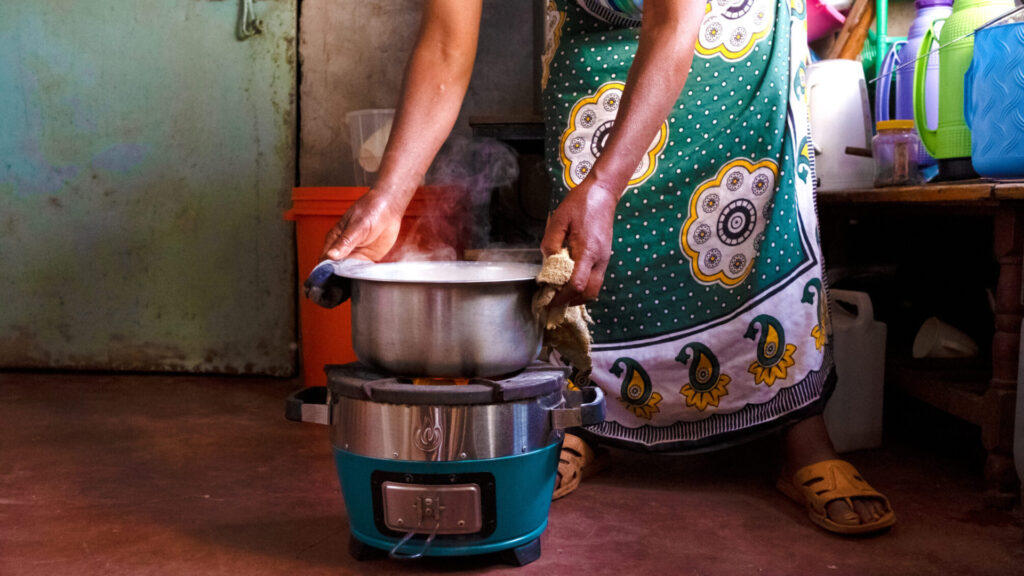
In Zambia, where many households still cook with charcoal and firewood, BioLite’s cookstoves will cut fuel use and emissions while improving health and household economics, disproportionately benefiting women and children in rural regions. Clean cooking remains among the most underfunded climate solutions globally.
“Most rural Zambian households still cook over smoky open flames, a practice that threatens both families’ health and the climate,” said Dr. Ethan Kay, managing director of emerging markets at BioLite. “A large-scale transformation of this magnitude is only achievable through our partnerships with the Cygnum’s Africa Go Green Fund, the KliK Foundation, our local Zambian distributors, and the Government of Zambia.”
Insurance was key to making the deal happen. CFC Underwriting and Kita worked together to create a carbon insurance solution that boosted AGG’s confidence to lend, making it easier for lenders to enter the carbon market.
“This transaction is particularly important in the context of the carbon market because it creates a replicable template for how Article 6.2 can be operationalised in practice,” said Aditya Sanghvi, carbon practice leader at CFC.
AGG, which has $232 million in funding and support from organisations like KfW and the African Development Bank, aims to create a model that other developers and financiers can use.
Cygnum Capital, which manages AGG from several global offices, oversees over $1.44 billion in investments across 38 African countries.