
Editor’s note: African-Startups is a sister publication of EU-Startups, bringing trusted coverage of startups, venture capital, and innovation across Africa.
Addis Ababa-based AgTech startup Lersha has won the Heifer Prize for Smallholder Agricultural Transformation at MIT Solve 2026.
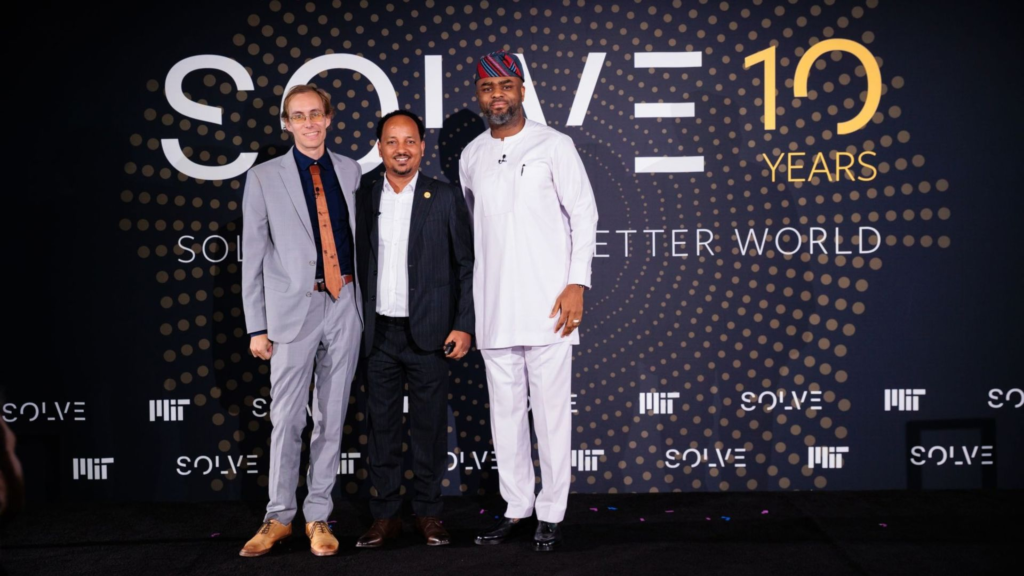
The prize was announced at the Solve Challenge Finals in New York, held during the UN General Assembly and Climate Week. The award comes with $100k and a place in the 2026 Solver Class.
“After a decade of running open innovation challenges, we know that finding exceptional solutions is only the beginning. For innovation to create lasting impact, it must be trusted, funded, adopted, and embedded in the institutions, markets, policies, and infrastructure that shape people’s lives. That’s our mission at Solve, and it is what these bold solutions represent: the potential to change systems and improve the lives of billions around the world,” said Hala Hanna, Executive Director of MIT Solve.
MIT Solve, a social impact initiative of the Massachusetts Institute of Technology, launched a decade ago on the bet that the best solutions to global challenges already exist and need to be found, funded and scaled. Since its inception, the initiative says it has run more than 110 challenges, drawn more than 30,000 applications from over 190 countries, and mobilised north of $90 million for 470 solutions. It also says 92 per cent of teams selected in the past five years are still operational.
The 10th anniversary challenge aimed to address how urgent global problems can be tackled by solutions that scale responsibly over the next decade. The challenge was open to “scale-ready” solutions, meaning products or services that are stable and showing early success.
MIT chose 10 winners, and each gets $100k in unrestricted funding, a pitch to investors and funders at the Solve Challenge Finals in New York, and travel costs covered. They also gain access to mentorship, pro bono legal support, discounted technology and the network of past Solver teams.
This year’s submissions were assessed on five criteria: potential for impact, feasibility, innovative approach, human-centred design and scalability. Lersha’s peers in the selected group include Kara Solar, Karya, Rocket Learning and BioIQ. Other prizes came from sponsors such as E Ink, Collegium and Philips Foundation.
Founded in 2018 by Abrhame Endrias, Lersha has built a phygital model combining mobile and web tools with field agents and a call centre. Farmers can access inputs, mechanisation, finance, market linkages and climate advisory through it.
Lersha’s Solve submission says it has onboarded nearly 380,000 farmers through more than 4,000 agents. Its core model is closed-loop financing that links farmers, banks, insurers, input suppliers and buyers. Support for farmers comes mainly in the form of inputs and mechanisation rather than cash, with repayment built into produce aggregation and sales.
The company reports early gains of about 24% in productivity, nearly 30% in income and 100% repayment rates, though these figures are self-reported and have not been independently verified. Lersha’s submission notes that agriculture supports over 80% of livelihoods in Ethiopia, yet only 8% of formal lending reaches the sector.
Run by Green Agro Solution PLC, Lersha aims to reach 1 million active farmers by 2030. It serves several Ethiopian regions and has a liaison office in Nairobi, Kenya.