Editor’s note: African-Startups is a sister publication of EU-Startups, bringing trusted coverage of startups, venture capital, and innovation across Africa.
The United Kingdom has launched Forge Africa, a pan-African investment platform backed by $52.45 million (£40 million) in British funding.
Forge Africa aims to help Kenya’s most promising businesses attract long-term investors and scale into regional and global markets.
“Africa has no shortage of talented entrepreneurs and businesses with the potential to compete in regional and global markets. But too many struggle to find the money and support they need to grow. Forge Africa will help close that gap,” said Kirsty McNeill, UK Minister of State for International Development (including Africa).
Forge Africa is a UK-created, pan-African platform headquartered in Kenya, built to support 100 promising businesses in attracting investors willing to back them for the long term. It will launch in Kenya first and later expand across Africa. The platform joins a growing cluster of UK-created institutions operating in Nairobi, including British International Investment (BII), FSD Africa, TradeMark Africa, and MOBILIST.
Alongside Forge Africa, the UK is working with the BII and other investors to explore new ways of mobilising Kenya’s domestic institutional capital to support the country’s growth and development.
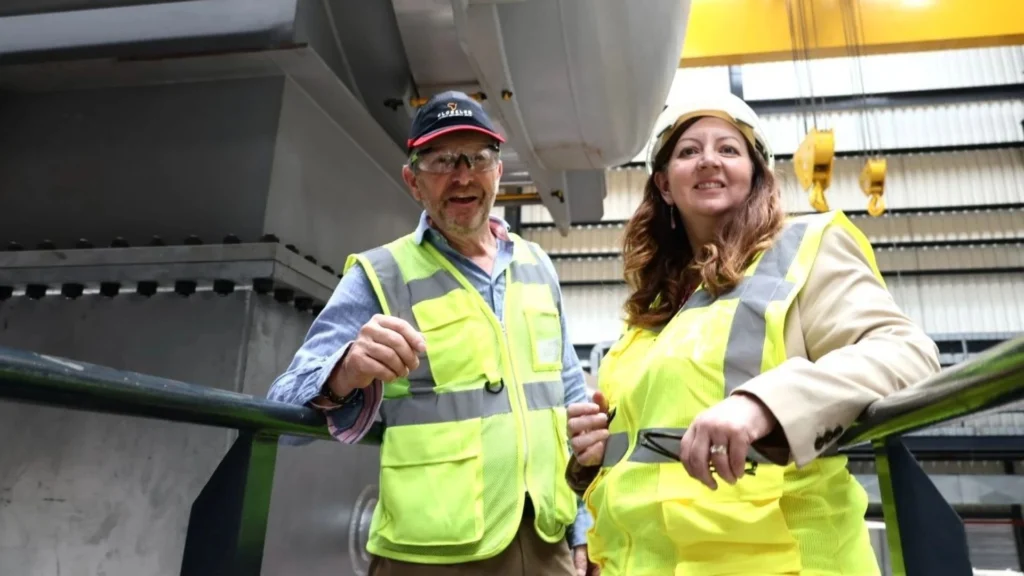
The announcement came at Octavia Carbon’s Project Hummingbird in Gilgil, where Kenyan engineers are using geothermal power drawn from the Rift Valley to capture carbon dioxide from the atmosphere and store it permanently underground. Early UK support helped the company raise around $10 million and create more than 100 skilled jobs, yet it now needs further investment to grow, a gap that Forge Africa aims to step in to address.
The choice of venue is symbolic of the kind of high-impact Kenyan business Forge Africa aims to develop. Forge Africa will share further details on how businesses can get involved in due course.
“Starting here in Kenya, it will help promising businesses like Octavia Carbon find investors and create quality jobs. This is what the Kenya-UK partnership looks like: British investment and expertise backing Kenyan innovation and enterprise, for the benefit of both our countries,” added McNeill.
During the visit to Nairobi, Minister McNeill also announced the launch of the next phase of the Kenya Catalytic Jobs Fund, a UK-funded programme that connects researchers, entrepreneurs, investors, industry and government to turn Kenyan ideas into successful, investable businesses.
During its first phase, the fund supported 19 Kenyan films, helping create 145,000 direct and indirect jobs, and securing $5.25 million (£4 million) in additional investment. The new phase will support more than 30 ventures in technology, artificial intelligence, biosciences, and women-led technology. By March 2029, the fund aims to mobilise $65.57 million (£50 million) in financing for more than 500 startups.
The expanded phase of the Kenya Catalytic Jobs Fund will be led by ISAAA AfriCenter and the Mawazo Institute, working with partners including Imperial College London, the University of Oxford’s AfOx initiative, BioInnovate Africa and NaiBAN.
“Kenya is full of ambitious businesses with real potential. Forge Africa and the Kenya Catalytic Jobs Fund will help them take the next step, from the lab to the market, and from start-up to scale-up. The UK and Kenya are building a better future together: more jobs, a safer region, and growth that reaches everyone,” said Matt Baugh, British High Commissioner to Kenya.
The Forge Africa and the Kenya Catalytic Jobs Fund are part of the broader UK-Kenya Strategic Partnership (2025 to 2030), signed by former UK Prime Minister Keir Starmer and President of Kenya William Ruto in July 2025. The UK-Kenya trade stands at $2.75 million (£2.1 billion) a year, with more than 150 British-linked companies supporting more than 250,000 jobs across the country.