

Editor’s note: African-Startups is a sister publication of EU-Startups, bringing trusted coverage of startups, venture capital, and innovation across Africa.
Tivano, a Zurich-based carbon removal startup focused on carbon dioxide removal in Namibia, has secured a $606.1k (CHF 500k) grant from REPIC, a Swiss programme that promotes knowledge and technology transfer to developing and transitioning economies.
The grant is meant to help Tivano advance its carbon dioxide removal (CDR) operations in Namibia.
“This grant will help us remove more CO2 from the atmosphere, restore more savanna grassland, and grow our work alongside our partners in Namibia,” the company said.
Founded in 2024 in Zurich, Tivano was built on the conviction that landscape restoration can only be sustained if it is done with a sound economic model. “We kept returning to the same question: what if restoration didn’t have to depend on goodwill alone? What if it could stand on an economic foundation strong enough to last for decades?” the company states on its website. The startup is currently enrolled in UPortunity, ETH Zurich’s startup accelerator sponsored by UBS.
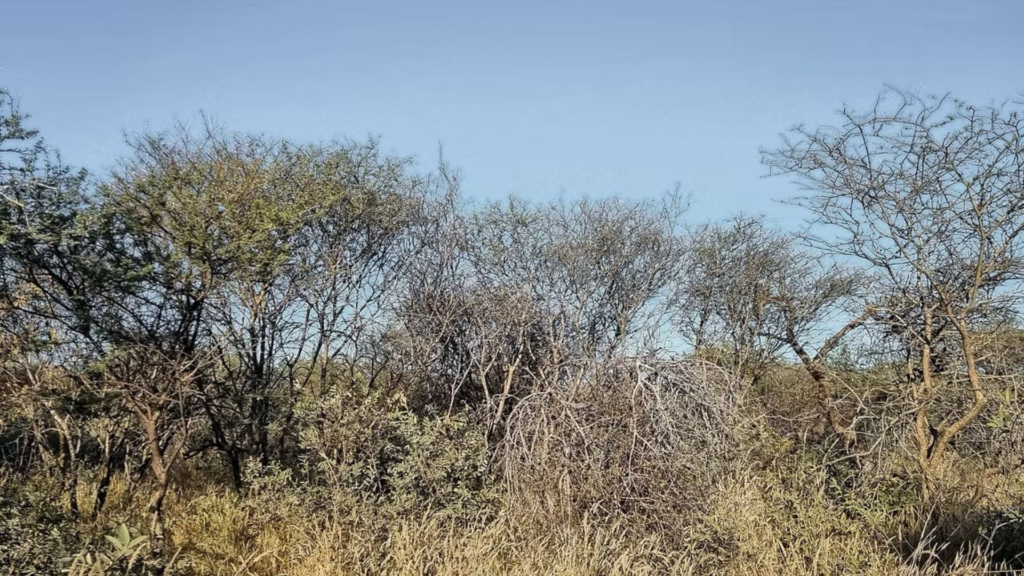
The funding comes at a time when Namibia is grappling with a severe bush encroachment problem. The dense, aggressive growth of native woody plants and shrubs into open grasslands and savannas has damaged roughly 45 million hectares of land, squeezing out grasses and herbaceous vegetation, drying out soil, and threatening biodiversity.
The traditional solution to bush encroachment is to burn the excess biomass or poison it, an activity that releases significant volumes of CO2 into the atmosphere. Tivano has developed a different approach: it selectively harvests the invasive bush, processes and dries the biomass, and seals it in oxygen-deprived underground vaults to prevent decomposition and carbon release for more than a century.
The company fits each vault with sensors for round-the-clock monitoring. Once sealed, Tivano says the land surface is restored, grasslands recover, and wildlife returns. The carbon credits generated through this process are certified by Puro.earth under its Terrestrial Storage of Biomass methodology, with a verified durability of over 100 years.
Tivano’s proof-of-concept, the Dragonfly project, has already demonstrated meaningful results, including restoration of more than 120 hectares of land, over 1,000 tonnes of CO2 removed, earning the company 1,049 certified carbon removal credits through Puro.earth. The project has also generated local employment since the company works with local partners in the region.
The REPIC grant will help Tivano move its Dragonfly project from demonstration to full-scale operation. The company will also use the grant to advance its Project Butterfly, which focuses on scaling up durable carbon removal operations while also scaling savanna ecological restoration.