

Despite the many challenges facing Africa’s healthcare sector, the ecosystem remains highly resilient and is poised for significant transformation. To unlock this potential, however, key stakeholders, including governments, international organisations, corporates, investors, and startups, must work together to develop healthcare solutions that are accessible, scalable, and rooted in local realities.
One startup working towards this goal is Uganda-based MedRef Healthbridge Solutions, a HealthTech company focused on removing barriers to essential care through inclusive, scalable, and community-driven solutions. Its mission is to make healthcare a universal right, not a privilege, by empowering health systems, caregivers, and frontline workers with smart, data-enabled tools.
MedRef’s flagship products include Ugavax in Uganda and the Pikin Child Health System in Sierra Leone. These digital platforms support immunisation, vitamin A, and deworming tracking while integrating real-time electronic medical records and referral systems. With Ugavax, the company aims to simplify the vaccination process for both parents and healthcare providers through automated scheduling, defaulter tracking, and reporting tools.
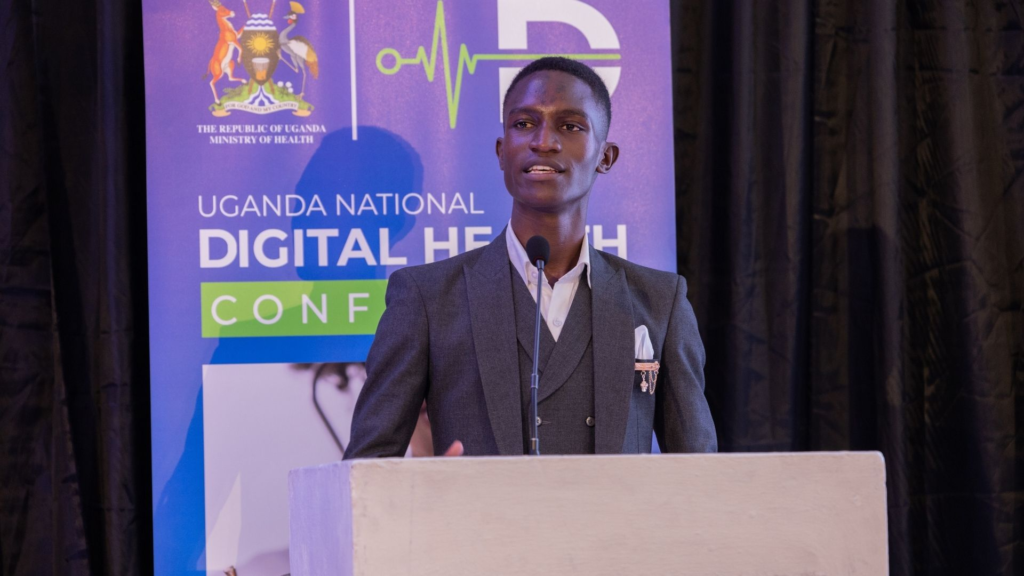
Emmanuel Ssekyanzi founded MedRef Healthbridge Solutions in 2022. He leads projects and companies across three core areas: healthcare diagnostics, pharmaceutical manufacturing, and supply chain systems; hospital set-up, management, and cold chain infrastructure; and HealthTech and digital health system innovation.
Through hubs in Freetown (West Africa), Vadodara (India HQ), and Kampala (Innovation Office), Ssekyanzi is developing a portfolio of scalable, context-specific healthcare solutions. These include hybrid water ambulances, digital EMRs, affordable laboratory systems, and last-mile delivery models.
He works closely with governments, development partners, and private sector stakeholders to attract investment into Africa’s future health systems. His goal is straightforward: to develop solutions that address local realities rather than simply follow global trends.
Ssekyanzi is also an author and speaker, contributing to conversations on leadership, innovation, and health equity in emerging markets.
Emmanuel and MedRef Healthbridge Solutions were also recognised at the Global Startup Awards Africa Continental Finale – Edition 11, where the Uganda-based company was named GIIG Future Shaper for its work in making healthcare more accessible and helping every child get a chance to thrive.
The GSA Africa Finale, in collaboration with the Global Innovation Initiative Group (GIIG), UVU Africa, and Global Startup Cities, was held during The Unique Summit in Cape Town on November 19, 2024. It honoured 15 transformative startups and ecosystem leaders from across the continent. These winners will now advance to the Global Grand Finale of Edition 11, which will take place as an integrated part of the EU-Startups Summit, one of Europe’s leading gatherings for founders and investors, being held today and tomorrow.
Founded in 2012, Global Startup Awards (GSA) is the world’s largest independent startup competition. With a presence in over 150 countries, GSA connects startups, investors, and ecosystem players globally. GSA Africa was founded in 2020 under the Global Startup Awards umbrella. It is the African continent’s largest startup competition. GSA Africa drives SDG-aligned innovation, empowering the next generation of African leaders through the GIIG Africa Fund and pan-African collaboration.
In this interview, Ssekyanzi discusses MedRef Healthbridge’s journey, early challenges, traction, partnerships, funding plans, long-term vision for Africa’s HealthTech ecosystem, and what he hopes to gain from the Global Grand Finale.
AFS: Tell us about your personal journey. What led you to start MedRef Healthbridge? Was there a specific moment or personal experience that made you realise this was the problem you wanted to solve?
ES: My journey began in India, where I was exposed to a thriving ecosystem that actively supports innovation and startups. That experience was eye-opening—it made me realise how much structured support systems can accelerate meaningful solutions.
At the same time, I couldn’t ignore the contrast with Africa’s healthcare landscape. I saw critical gaps in accountability, access, and most importantly, data. We often talk about data-driven decision-making, but I kept asking myself, how do you make quality decisions without quality data?
That question became the foundation of MedRef Healthbridge. We started by focusing on immunisation and child health, but today we are building a comprehensive, AI-powered platform that delivers real-time health data. Our long-term vision is to enable truly paperless hospitals across Africa.
AFS: What are some of the initial challenges you faced while setting up MedRef Healthbridge?
ES: Like many African startups, our early journey was defined by resilience. Funding was a major hurdle—it took us nearly three years to raise our first capital.
We also had to navigate complex regulatory environments, software licensing requirements, and the challenge of building a patient, mission-driven team. In Africa, building a startup is not just about speed; it’s about endurance.
AFS: What problem are you solving in your local or regional market?
ES: We are solving a continental challenge, not just a local one. Sub-Saharan Africa carries the highest burden of under-five mortality and neonatal deaths globally, yet we lack real-time, case-based data to effectively track and respond to these issues.
With our digital child health system, we enable healthcare providers to track immunisation dropouts, identify malnourished children, and monitor treatment adherence, all in real time.
We also address fragmentation in care. Through unique patient identifiers, a child can access healthcare anywhere without duplication of records. This reduces errors, eliminates manual transcription delays, and most importantly, strengthens accountability in healthcare delivery.
AFS: What traction have you seen so far?
ES: While many measure traction purely in revenue, we measure it through impact and progress.
We have successfully built both web and mobile platforms, including offline functionality for low-connectivity environments. We secured a national pilot and rollout agreement with the Government of Sierra Leone, supported by UNICEF.
Our team has grown into a strong, multidisciplinary unit with over 60 years of combined experience in software development and scaling. Today, MedRef is valued at over $3 million.
AFS: Which of MedRef’s solutions is currently the most developed or widely deployed?
ES: Our most advanced product is the MedRef Digital Child Health Management System, a fully integrated mobile and web-based EMR platform designed specifically for child health.
AFS: What is MedRef’s business model, and what are your main revenue-generation streams?
ES: Our revenue model is built around customisation, implementation, and ongoing maintenance of our systems. We primarily work with ministries of health and private healthcare providers, offering subscription-based access to our platforms.
AFS: What is the current funding scenario for MedRef? Have you raised funding, and are you planning to raise capital in the near future?
ES: We have received funding support from UNICEF, which is enabling deployment across over 100 health facilities. Looking ahead, our goal is to scale to more than 1,500 facilities within the next three years. We are actively exploring additional capital to accelerate product development, expand pilots, and grow our team.
AFS: If you raise funding, what would be the top priorities for deploying that capital?
ES: Our priorities are clear: scaling operations, strengthening our team, and investing in marketing and distribution. Scaling in Africa requires both technology and trust—we intend to invest in both.
AFS: How important are government and development-sector partnerships to MedRef’s growth model?
ES: Partnerships are central to our model. Governments are key stakeholders in healthcare delivery, and working with them ensures sustainability and scale. For example, in Sierra Leone, our collaboration with the government allows us to deploy, train, and scale effectively. Support mechanisms like tax incentives also play a significant role in enabling innovation.
AFS: What kind of partners are you currently looking for: governments, hospitals, NGOs, investors, technical partners, or insurers?
ES: We are actively seeking partnerships with governments, NGOs, hospitals, and technical collaborators who share our vision for transforming healthcare delivery.
AFS: Healthcare is a highly sensitive sector. How do you approach data privacy, patient trust, and regulatory compliance?
ES: We treat data privacy as a core responsibility. We comply with Uganda’s data protection regulations and hold a certified data protection credential. Our systems use encrypted databases and secure servers, but we also go beyond technology—we invest in training and awareness for all our partners. Data protection is a shared responsibility.
AFS: What are the biggest barriers to digital health adoption in African markets today?
ES: The biggest barriers are infrastructure and capacity. This includes internet connectivity, availability of equipped health facilities, and skilled human resources capable of using digital tools. Funding also remains a major constraint—not just for building systems, but for scaling, training, and maintaining them.
AFS: Do you see MedRef as an Africa-first company, or as a global HealthTech company built from Africa? Do you plan to scale MedRef beyond Africa? What makes your solution relevant beyond Africa?
ES: MedRef is proudly an Africa-first company. We understand the terrain, the challenges, and the opportunities. Africa itself—with 54 countries—is a massive and diverse market. That said, we are open to global opportunities. Our solutions are built in Africa, but the principles behind them are globally relevant.
AFS: Currently, how big is your team? What are your hiring plans for the future?
ES: We currently have a team of about 25 people across Uganda, India, and Sierra Leone, spanning both technical and operational roles. We will continue to grow strategically as the need arises.
AFS: How has GSA Africa recognition helped MedRef?
ES: The recognition from GSA Africa was deeply motivating. It gave us confidence and reaffirmed that our work matters. It reminded us that we are no longer building in isolation—our efforts are being seen, valued, and supported.
AFS: What message do you want to take to Malta about Africa’s Healthtech ecosystem?
ES: Africa has the capability to build, own, sustain, and scale its own healthtech solutions. We are the youngest population globally, full of energy and ideas. What we need is stronger ecosystem support—especially in funding and infrastructure—to empower the next generation of innovators.
AFS: Beyond the competition itself, what concrete outcomes are you hoping for from the Global Grand Finale: partnerships, funding, market access, or visibility?
ES: Our key focus is on partnerships and visibility. We believe the right partnerships will unlock scale.
AFS: What does the global HealthTech ecosystem often misunderstand about building healthcare solutions in Africa? What should the global startup ecosystem understand better about the African HealthTech startups?
ES: Africa is not a one-size-fits-all market. Solutions must be deeply contextualised. What works elsewhere cannot simply be copied and deployed here—you must design with the ecosystem in mind.
AFS: Looking ahead, what is your long-term vision for MedRef Healthbridge?
ES: Our vision is simple but ambitious: To build systems that make healthcare more accessible, affordable, and accountable for everyone.