

Editor’s note: African-Startups is a sister publication of EU-Startups, bringing trusted coverage of startups, venture capital, and innovation across Africa.
Tomato Jos Farming and Processing Limited, a Kaduna-based tomato paste manufacturer, has secured a $2 million impact-linked debt facility from Sabou Capital.
The facility, denominated in naira, is structured as impact-linked debt, a financing instrument that ties the investor’s returns to social and economic outcomes.
“Tomato Jos is exactly the kind of business we back, one that turns an import dependency into local jobs, farmer income, and a stronger domestic economy. We structured this deal so that our financial return grows with the impact they create,” said Surayyah Ahmad, Managing Partner, Sabou Capital.
Founded in 2014 by Mira Mehta, Tomato Jos is a vertically integrated tomato paste maker with what Sabou describes as Nigeria’s most technologically advanced tomato processing facility. The plant is backed by the country’s largest network of smallholder tomato farmers and a fast-growing portfolio of branded pastes in West Africa.
Mehta got the idea to start a tomato paste maker after she witnessed a tomato market glut in Northern Nigeria. Nigeria produced about 65% of the tomatoes in West Africa, yet it was also the world’s largest importer of tomato paste. Mehta says she started Tomato Jos to fix this contradiction. The company runs a farm in Kangimi, in Kaduna State’s Igabi Local Government Area, and a $5 million processing plant in the state.
The funding comes on the back of the Federal Government’s recent ban on tomato paste imports. According to Sabou Capital, the country consumes more than 2.3 million tons of fresh tomatoes a year, and up to 90% of demand for processed tomato products was historically met through imports. The ban on imports has opened the market to domestic manufacturers, and Sabou Capital argues that Tomato Jos, with its certified processing facility and established supply chain, is positioned to fill the gap.
“As Tomato Jos continues to grow, partners like Sabou Capital are crucial to our journey. The opportunity in front of us is real, but so is the competition; we’re up against international organisations with deep pockets,” said Mehta, founder and CEO, Tomato Jos.
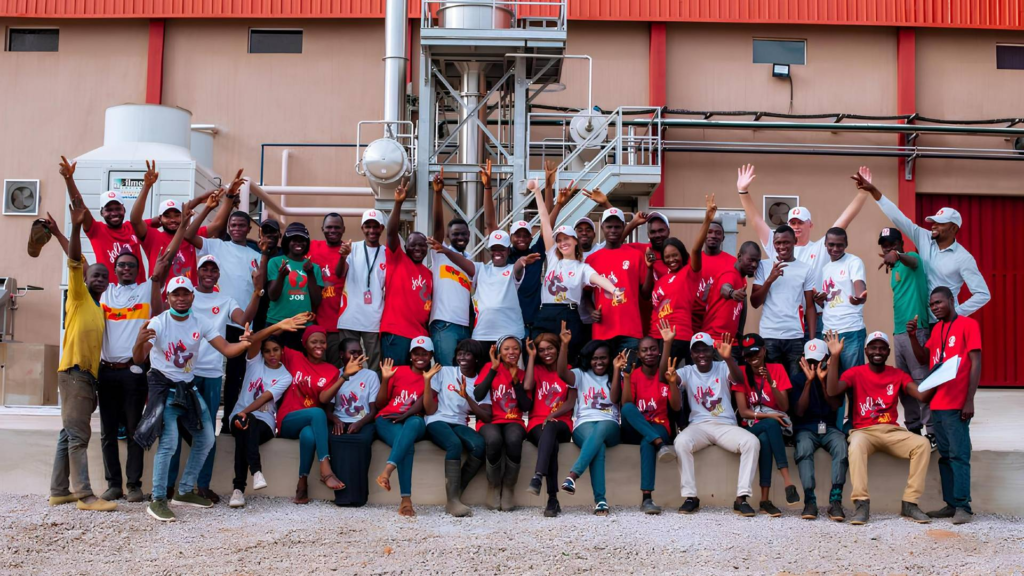
Tomato Jos directly employs 204 people and sources from more than 3,000 smallholder farmers, 60% of whom are women. It also meets all four criteria of the 2X Challenge, a global benchmark for gender-lens investment.
The funding will support the company’s growth as it targets at least 10% market share. The funding will also help expand its network of smallholder farmers and build out its processing capacity as it aims to have at least half of its raw material come from smallholder farmers.