
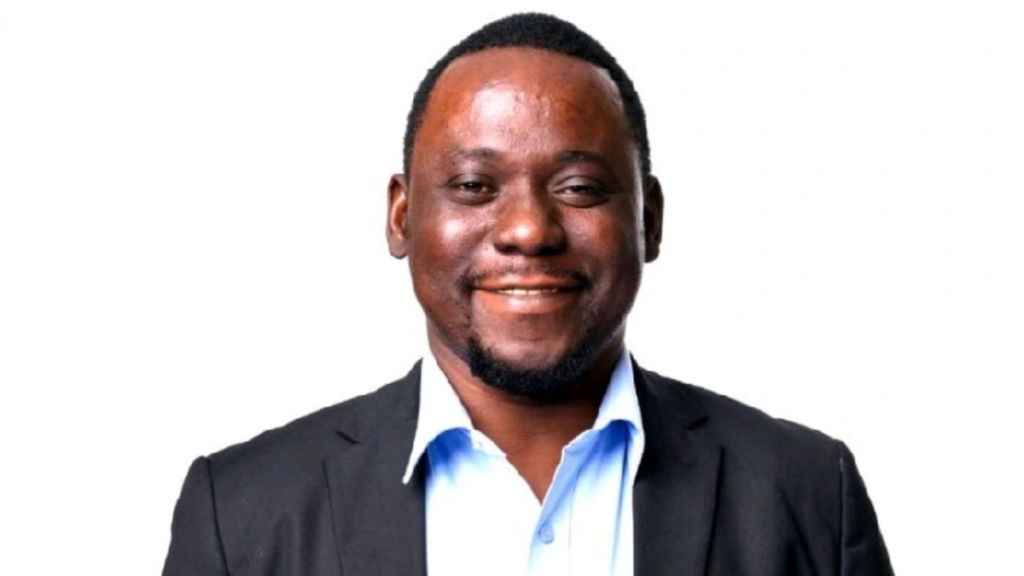
Across Kenya, young people find themselves in the same entrepreneurial boat: bright business ideas, real ambition to build something of their own, but almost no mentorship, market knowledge, or a roadmap for turning a concept into a functioning company. It is a gap Simeon Ogonda watched closely for years, and it is that gap that eventually pushed him to build an organisation to close it.
Ogonda is the founder of Millennial-Legacy Investments, a Kenya-headquartered research and projects consultancy that has spent close to a decade working with governments, NGOs, startups and established businesses across East Africa. The stated purpose of Millennial-Legacy is to empower organisations to create lasting positive impact for communities, delivered through strategic planning, research and evaluation, entrepreneurship training, programme design, and communications support. The firm’s motto, as Ogonda puts it, has always been “building legacies through the positive power of business”.
What began as support for micro-enterprises has since broadened considerably. Millennial Legacy now runs paid consultancy engagements secured largely through competitive proposals, while its non-profit arm, the Millennial Legacy Foundation, channels resources into youth mentorship, entrepreneurship clinics and, from January 2027, the Reuben Ogonda Education Fund, a scholarship programme named after Ogonda’s father.
Ogonda calls Millennial-Legacy pan-African, having delivered projects in Kenya, Uganda, the Democratic Republic of the Congo, Mozambique, South Africa, and Ghana for clients ranging from Oxfam International and WaterAid to RefugePoint and McGill University.
What Ogonda is doing at Millennial-Legacy traces back to his own path that runs through international mentorship and academic circles. A Commonwealth Scholar, he holds a master’s degree in Education and International Development from University College London and a bachelor’s degree in Philosophy and Political Science from Maseno University.
He is an alumnus of the Community Solutions Programme and the American Express Leadership Academy, where he was named 2016 Non-Profit Leader of the Year, and his work has drawn coverage from major media outlets.
Nearly a decade since its inception, Millennial Legacy remains deliberately small and bootstrapped, run by a lean team of senior consultants, and, by Ogonda’s own account, built with a view toward becoming a hundred-year institution rather than a fast-scaling one.
In this wide-ranging interview with African-Startups.com, Ogonda discusses why he chose to keep the company lean, how he separates its commercial and nonprofit arms, what excites and worries him about Africa’s wider startup ecosystem, and where Millennial Legacy is headed over the next three years.
AFS: What inspired you to establish Millennial Legacy?
SO: I was inspired to establish Millennial Legacy by the many young people eager to build businesses but lacking the guidance, mentorship, and practical knowledge to understand how startups operate. Many Kenyan youth have long had the ambition and creativity to become job creators, yet have faced limited access to support and opportunities. I wanted to help bridge that gap by equipping young entrepreneurs with the skills, networks, and confidence to turn their ideas into sustainable businesses, create employment, and actively shape a better future for themselves and their communities.
Having had earlier exposure to mentorship at an international level, having participated in global business competitions, and having completed professional programs, I felt that Millennial Legacy had the capacity to support a legacy of millennials. This is why our motto has always been, “Building legacies through the positive power of business”.
AFS: Millennial Legacy began by supporting micro-enterprises before expanding into consultancy, investments, and nonprofit programmes. What prompted this evolution?
SO: Our evolution was prompted by a combination of market needs, growth opportunities, and the need to broaden our clientele and remain a viable, sustainable brand. Micro-enterprises and startups face cash limitations regularly, and depending solely on that revenue stream threatened to end our vision before it got a chance to grow. I recognised that many organisations—including startups, established businesses, governments, and NGOs—needed more comprehensive support in areas such as strategic planning, research, entrepreneurship development, education, project management, and organisational growth.
My previous involvement in professional mentorship and fellowship programs, together with the networks and partnerships I built through nonprofit work, also exposed me to wider opportunities to create impact. This encouraged me to expand Millennial Legacy into consultancy, investments, and nonprofit programs, enabling us to respond to diverse client needs while advancing our vision of empowering businesses, organisations, and communities to create lasting positive change.
AFS: How does Millennial Legacy’s business model work today, and which services generate most of its revenue?
SO: Today, Millennial Legacy operates as a boutique research and projects consultancy serving governments, NGOs, startups, established businesses, and community initiatives across East Africa. We generate revenue primarily through project-based consultancy assignments secured through competitive requests for proposals (RFPs) and directly sourced client engagements.
Our core services include education research and development, strategic and business planning, exploratory quantitative and qualitative research, assessments and evaluations, program design and management, entrepreneurship and employability development, digital learning, and strategic communication. While our nonprofit programs are central to our social-impact mission, our main revenue-generating activities are consultancy engagements—particularly research, strategic planning, organisational development, and program design and evaluation—which allow us to deliver tailored, evidence-based solutions while sustaining the wider Millennial Legacy brand and its community-focused initiatives.
AFS: The company works with startups, entrepreneurs, NGOs, and community-based organisations. What are the most common challenges these clients face, and how does Millennial Legacy address them?
SO: Our clients commonly face challenges such as unclear strategies, limited market knowledge, weak organisational systems, inadequate research and evidence, funding constraints, and limited capacity to design and implement effective programs. Larger institutions require short-term expertise to develop new programs or evaluate existing ones.
Millennial Legacy addresses these needs through tailored research, strategic and business planning, organisational development, entrepreneurship and employability training, program design and management, monitoring and evaluation, fundraising support, and strategic communication. Our approach combines practical guidance with collaborative implementation, helping clients strengthen their systems, make informed decisions, expand their opportunities, and achieve sustainable impact.
AFS: Millennial Legacy has indicated that it is developing an investment program. What types of businesses will it support, at what stages, and will it invest capital, expertise, or both?
SO: No, we are not developing an investment program for ourselves. We are supporting clients to develop investment strategies and plans to expand their businesses.
AFS: Millennial Legacy describes itself as a pan-African company. Which countries does it currently operate in, and which markets are central to its expansion plans?
SO: We are headquartered in Kenya but have supported clients across several African countries, including Kenya, Uganda, the Democratic Republic of the Congo (DRC), Mozambique, South Africa, and Ghana. This regional experience positions the organisation to continue expanding its consultancy, research, strategic planning, entrepreneurship development, and program-support services across Africa.
AFS: How is Millennial-Legacy Investments structured in relation to the Millennial Legacy Foundation, and how do you maintain financial and operational separation between the commercial and nonprofit activities?
SO: Millennial-Legacy Investments is an LLC (Limited Liability Company), while the Foundation is a CLG (Company Limited by Guarantee). Both maintain separate governance structures. While the LLC is run by me and three senior consultants who apply for and manage different clients as we acquire them, the Foundation is run by a project manager who is hired on a needs basis when we have active projects on the ground.
This management structure is essential for us as a small brand that seeks to build legacies without evolving into a large corporate structure. My dream is for this to become a 100-year organisation with different generations coming to run it. It is for this reason that I do not mind remaining small for now, as we build legacies, learn the capacities of different industries, and build our community’s understanding and appreciation of our pan-African spirit.
AFS: The Foundation is shifting its attention towards educational scholarships and runs the Reuben Ogonda Education Fund. Why was this focus chosen, and how are beneficiaries selected?
SO: The Foundation chose to focus on educational scholarships because education is central to Millennial Legacy’s long-term commitment to building people, communities, and sustainable legacies. (The program’s start date has been moved to January 2027, however, due to an unexpected family emergency.) Our desire to grow over the long term has also influenced our interest in investing in the local community in which we operate, including through current and future opportunities that expand access to education.
The Reuben Ogonda Education Fund is inspired by the founder’s father, who spent his adult life ensuring that all his children had a chance to receive an education. His sacrifices to educate the founder and his siblings are part of the reason this story is possible; Millennial Legacy exists today because of the loving and selfless spirit of Reuben Ogonda.
Beneficiaries are selected through a needs-based process, prioritising learners who demonstrate genuine financial need and would otherwise struggle to access or continue their education. The Foundation also considers each applicant’s personal circumstances, commitment to their education, and potential to contribute positively to their family and community. Through this work, the Foundation seeks to remain intentionally lean while building a 100-year organisation that continually invests in local communities and creates opportunities for future generations.
AFS: How is the Foundation funded, and what safeguards are in place to ensure transparency and measure the long-term outcomes of its programs?
SO: The Foundation is funded by profits from the LLC and through grants and other fundraising activities. Due to the intermittent nature of funding for our Foundation, Millennial Legacy began a process to secure permanent funding for one education programme under the Reuben Ogonda Fund. This will enable the Foundation to maintain a regular programming process. It shall remain independent and have its own system.
AFS: Is Millennial Legacy currently profitable, bootstrapped, or externally funded? Are you considering raising outside capital to support its next phase?
SO: Millennial Legacy is entirely bootstrapped and is not currently seeking external capital. After eight years of operation, we have concluded that our immediate priority is not to raise more money but to restructure the business for greater efficiency and long-term sustainability.
Our plan is to establish one dedicated programme under the Foundation, funded through profits generated by the LLC. For the LLC, the immediate priority is to construct a permanent office in Kisumu County. We also intend to shift toward contract-based consultants and shared staff across different projects, and to build a technological research system that reduces our reliance on temporary SaaS tools and the costly overheads of handling individual clients. Owning our premises will reduce recurrent rental costs, strengthen our operational capacity, and support the development of a stronger balance sheet over time.
With the exception of the most recent quarter, the company has typically secured between six and eleven consultancy engagements annually. We intend to improve our financial position by reducing fixed costs, investing in our own office, and continuing to work with contract-based consultants. Based on this trajectory, we expect to achieve consistent profitability within the next five years, while preserving our investments in land, office infrastructure, and digital systems for client acquisition and management, and maintaining limited liabilities.
AFS: When you look at the African startup ecosystem now, what excites you the most?
SO: What excites us most is the growing ability of African entrepreneurs to create locally relevant solutions to the continent’s most pressing challenges. Founders are building innovative businesses in sectors such as financial inclusion, agriculture, healthcare, education, climate resilience, logistics, and digital services. Through technology, many startups are reaching underserved communities, creating jobs, improving efficiency, and expanding across borders, while combining commercial sustainability with meaningful social impact.
We are also encouraged by the strengthening of Africa’s entrepreneurial support ecosystem, including accelerators, investors, universities, development organisations, and professional networks. However, the next phase must focus not only on launching startups, but also on helping them build durable institutions through stronger governance, financial management, talent, strategy, and operational systems. The combination of innovation, local ownership, and long-term resilience is what excites us most about Africa’s startup future.
AFS: On the other hand, what concerns you most about the ecosystem’s direction?
SO: What concerns us most is the ecosystem’s strong emphasis on launching startups, raising capital, and pursuing rapid growth, often at the expense of building durable institutions. Many promising businesses still struggle with weak governance, financial management, operational systems, succession planning, and overdependence on their founders or short-term funding.
We are also concerned that support and investment remain concentrated in a few sectors, countries, and well-connected entrepreneurs, leaving many locally relevant businesses underserved. The ecosystem should therefore place greater emphasis on patient capital, responsible growth, locally grounded solutions, and the systems needed to create resilient organisations that can deliver lasting economic and social impact.
AFS: How important is local context when building technology for African markets, and where do you see founders or investors getting that context wrong?
SO: Local context is essential when building technology for African markets because user needs, infrastructure, purchasing power, regulations, languages, and cultural practices vary significantly across countries and communities. Founders and investors sometimes get this wrong by importing business models without adapting them to local realities, assuming that one solution can serve the entire continent, or designing for urban, highly connected users while overlooking rural and lower-income communities.
They may also underestimate informal economies, trust relationships, limited digital and financial infrastructure, and the importance of affordability and accessibility. Sustainable technology businesses must therefore be developed through deep engagement with local users and partners, tested in real contexts, and adapted to the specific markets and communities they aim to serve.
AFS: What are Millennial Legacy’s main targets for the next three years in terms of revenue, clients, geographic expansion, investments, and social impact?
SO: Over the next three years, Millennial Legacy will prioritise expanding its client base in Kenya, with a stronger focus on education, strategic consulting, and policy analysis. The organisation also aims to deepen its presence in the African markets where it already operates, while exploring opportunities for broader regional growth. Completing my PhD within the next three years will also strengthen our professional profile as we seek to attract more senior consultants with this qualification.
To support these objectives, we plan to invest in long-term client-acquisition and market-development initiatives. These will include sponsoring and participating in conferences and other knowledge-based events, joining relevant professional networks across East Africa, and increasing our visibility through media engagements and thought-leadership platforms. These efforts are intended to strengthen the organisation’s market position, build lasting institutional relationships, and create a stronger foundation for future revenue growth and expanded social-impact programming.