
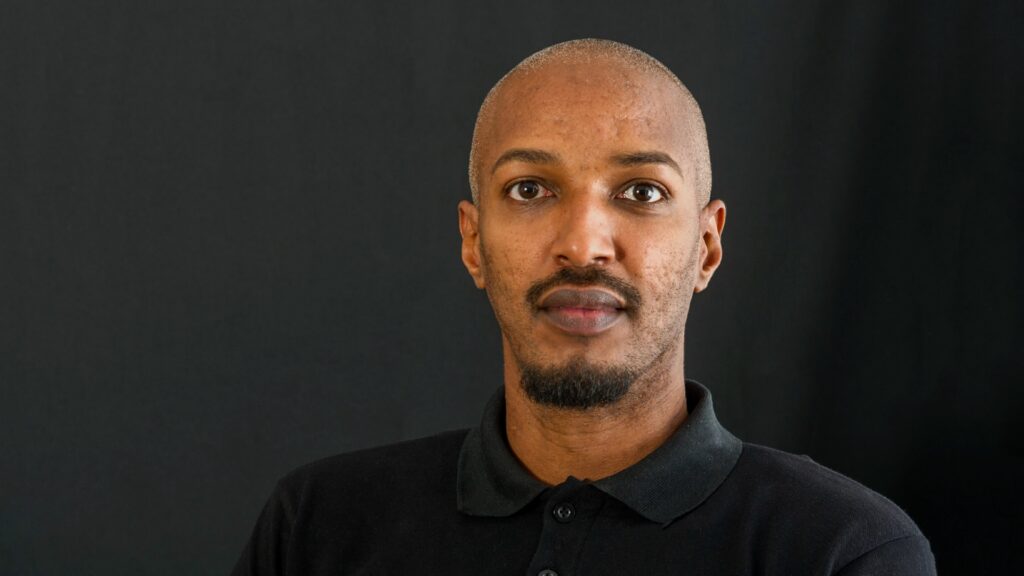
When you think about what Africa’s digital future needs- not just big ideas but gritty, grounded builders who understand the terrain- Henri Nyakarundi is the name that surfaces. Over a career spanning more than 25 years, he has built businesses across two continents, authored a book on the builder’s journey, and earned recognition as an award-winning entrepreneur and speaker.
Today, beyond running ARED Group, he coaches founders, programmes, and organisations to scale climate solutions, hard tech, and DeepTech across Africa, equipping them with bankable business models, partner-ready growth strategies, and capital narratives built for real-world constraints.
Like many successful entrepreneurs, Nyakarundi’s entrepreneurial story also began early, at 19 in the United States, to be precise, where he would spend the next 17 years. After years of trial across different ventures, he built his first truly successful business in logistics, a trucking company with a fleet of 20 vehicles serving government contracts and commercial clients across multiple states. It was unglamorous, he admits, and demanded work that taught him something no accelerator programme can: how to run an operating business under pressure.
That foundation would prove essential when, in 2014, he made a deliberate choice to return to Africa. The goal was no longer just to build a company. It was to solve problems that mattered, in markets too often dismissed as difficult or unworthy of serious investment.
ARED launched with a smart solar kiosk designed to deliver phone charging and Wi-Fi access in a single mobile unit, a practical response to Africa’s twin deficits of energy and connectivity. The business expanded into six countries before the kiosk technology was sold in 2021.
What remained was something more valuable than the product itself: a hard-won understanding of the continent’s digital reality. SIM-based connectivity was too unreliable to build on. The solution was to bring services closer to the user by storing content locally, so communities could access tools and information even when the internet was weak or absent.
That insight now anchors ARED’s current mission, building distributed digital infrastructure that functions both online and offline, serving hospitals, small businesses, hotels, and other institutions that cannot afford to go dark every time connectivity drops.
Ask Nyakarundi about Africa’s biggest obstacle, and he does not point to infrastructure gaps or funding shortfalls. He points inward. Across governments, corporations, and civil society, there is a persistent and damaging belief that foreign solutions are inherently superior to locally built ones. The result is a continent that spends hard currency importing expensive systems poorly suited to local conditions, while talented homegrown innovators leave for places where their work is valued.
He is equally direct about the funding ecosystem: Africa has pension capital, but almost none of it flows into local innovation. Corporations invest too little through venture channels. Financial institutions lack structured support for local technology. The consequence is that African founders building long-term, capital-intensive solutions, exactly the kind the continent needs most, are often forced to seek validation and capital abroad just to solve problems at home.
For any ecosystem to succeed, it needs to know two things: what it has and what it lacks. In the case of the African ecosystem, there is none more suited to answer that question than Nyakarundi. In a wide-ranging interview with African-Startups.com, he charts his entrepreneurial journey, the decision to move back home, why replicating the US approach fails on the continent, the demographic advantage, the right conditions to grow, and the transformative opportunity in green industries such as waste-to-energy, recycling, green construction, and organic agriculture, alongside distributed digital infrastructure and food processing.
AFS: Could you briefly walk us through your entrepreneurial journey and the key moments that shaped the way you think about building businesses in Africa?
HN: My entrepreneurial journey spans more than 25 years. I started very young, around the age of 19 or 20, and over time I experimented with many business types, from e-commerce to door-to-door sales. Much of my early experience was shaped in the United States, where I moved for college and spent 17 years.
It took me about seven years before I built my first truly successful business. That business was in logistics, where I ran a trucking company with a fleet of around 20 trucks operating across several states, handling everything from food transport to government and refrigerated shipments. That experience taught me discipline, resilience, and how to build and manage a real operating business.
In 2014, I moved back to Africa because I wanted to build something with a deeper impact. That decision changed the way I viewed entrepreneurship. It was no longer just about building a company. It became about solving meaningful problems in markets that are often overlooked, underserved, and misunderstood.
AFS: What was the original problem you set out to solve when you started ARED, and how has that vision evolved over the years?
HN: ARED started in 2014 with a smart solar kiosk idea. The goal was not just to provide phone charging, but also Wi-Fi access in one all-in-one mobile system. At that time, smartphone use was rising quickly across Africa, but access to reliable energy was, and still is, a major challenge. I believed a mobile kiosk could help bridge both needs.
The idea came a little early, but we still managed to expand into six countries before selling the kiosk technology in 2021. Crucially, the experience taught us that providing Wi-Fi through SIM cards was not reliable enough because connectivity was too unstable. That led us to start storing content locally, closer to the user, so people could still access services even when the internet was weak.
That experience became the foundation for what ARED is today. After selling the kiosk business, we kept the ARED brand but shifted fully into a new direction: building local digital infrastructure that can work online or offline. Over time, we realised that the real need was not just internet access. It was reliable access to digital services, tools, and applications, even when connectivity dropped.
That is how our current vision was born. Today, ARED focuses on building distributed infrastructure that helps small businesses, government institutions, and other sectors continue operating even when connectivity fails. The idea is simple: your business should not stop just because the internet does.
AFS: Building infrastructure-led technology in Africa is rarely straightforward. What have been some of the toughest challenges you have faced while building ARED?
HN: The challenges have been many. First, the type of large, centralised systems that dominate the market are often too expensive, consume too much energy, and were really designed for banks, telecoms, and governments, not for small and medium-sized businesses.
Our decision was to focus on a more distributed model because it is better suited to local realities. It is more affordable, easier to deploy, uses less energy, and can recover investment faster. It also serves a customer group that is often ignored, including hospitals, restaurants, hotels, and other small and medium-sized businesses that need reliable and flexible systems.
At the same time, Africa has structural challenges that make building any business harder. Purchasing power is low, currencies fluctuate, policies differ from country to country, and access to capital remains very difficult. All of this adds friction. So the challenge is not only building the product. It is building the right model for a market that is fragmented, complex, and often underserved.
AFS: You have built and worked across different parts of the African tech ecosystem. What are some of the biggest lessons you have learned as a founder and operator?
HN: My biggest lesson is that Africa does not lack talent or solutions. We already have talented people and companies solving real problems in healthcare, energy, agriculture, and many other sectors.
What we lack is the right mindset.
Too often, we do not trust local talent. We prefer imported technology over homegrown solutions. We do not create enough policies or systems that support local builders. As a result, a lot of our best talent leaves the continent for places where their skills are better valued.
This has been one of the most painful lessons for me. Africa has answers, and the problem is that we do not look inward for them. We keep paying hard currency for foreign systems, many of which are expensive and not always suited to our realities, while local innovators struggle to get recognition and support.
AFS: Access to capital remains one of the biggest challenges for African founders, especially those building capital-intensive solutions. What has your own fundraising journey taught you?
HN: Access to capital is definitely a challenge, but I believe the issue goes deeper than funding alone. The real problem is that the ecosystem itself is broken.
Africa has pension funds, but very little of that money is invested into local innovation. We do not have enough meaningful research and development support. Large corporations are also not investing enough through venture funds, acquisitions, or structured innovation programs. Even large financial institutions on the continent do not seem to have strong systems for backing local technology at the level we need.
So the problem is not simply that founders cannot raise money. The deeper problem is that African innovators often have to leave the continent, or seek capital from outside the continent, just to build solutions for African problems. That is a broken model.
It is even harder for founders building expensive, long-term solutions. Those businesses need patient capital, strong institutions, and long-term vision. Too often, that support is missing.
AFS: What do you think African founders often misunderstand about fundraising and scaling?
HN: I do not think African founders fundamentally misunderstand fundraising more than founders anywhere else. First-time founders everywhere need more mentorship, more exposure, and more experience.
The bigger issue is that they are operating in a weak ecosystem. In many places, the problem is not the founder’s ambition or understanding. It is the environment around them.
For example, in the United States, there are laws and programs designed to ensure a share of government contracts go to small businesses. In many African countries, even when such ideas exist, they are not properly enforced. Too often, success depends more on relationships than on the strength of the solution.
The government is usually the biggest customer in any country. If that customer spends most of its budget on foreign solutions, then local founders are left with very limited room to grow. That makes both fundraising and scaling much harder.
AFS: Where do you see the biggest untapped opportunities in Africa today?
HN: One of the biggest untapped opportunities is in green industries. I work with many companies in this area, and I see tremendous potential.
This includes turning waste into energy, recycling tyres and plastic into finished products, and building better systems around reuse. Africa already has the raw need and, in many cases, the right instinct for these kinds of solutions. What is missing is the ability to put in place the tools, systems, and scale needed to make them bigger.
There is also strong potential in green construction materials, especially because of the huge demand for affordable housing. As Africa’s population continues to grow, the need for smarter ways to build, recycle, and produce energy will only become more urgent.
AFS: When you look at the African startup ecosystem now, what excites you the most?
HN: What excites me most is the youth. Innovation is driven by young people, and Africa is one of the youngest continents in the world. Around 70% of the population is below the age of 30. That means there is an enormous pool of untapped talent.
We are also quick to adopt new ideas and technologies. That energy is powerful. It shows that Africa is not behind in potential. In many ways, the creativity and openness are already there.
What excites me is the possibility. If we learn to nurture and support this talent properly, the future could look very different.
AFS: On the other hand, what concerns you most about the ecosystem’s direction?
HN: My biggest concern remains mindset.
We still do a poor job of recognising talent, supporting local builders, and consuming local technology. Across government, corporations, and even society more broadly, there is still a belief that anything foreign is automatically better than what is built locally.
That way of thinking is deeply damaging. It slows down our ability to grow our own solutions and, in many ways, reflects an inferiority complex. Until that changes, it will remain difficult for the ecosystem to fully mature. I believe education and long-term leadership are key to changing that mindset.
AFS: You recently raised the question of why Africa has so few serious corporate venture funds. Why do you think African corporates have not yet become more active as startup investors or strategic partners?
HN: I raised that issue because corporate investment could be a major force in changing the African innovation ecosystem.
Technology is moving too fast for corporations to remain passive. Whether in telecom, banking, or other sectors, no company can assume it is protected forever. Yet many corporate leaders are still thinking in old ways. They understand, in theory, that they need to innovate, but execution is weak.
Some companies have tried venture funds and not succeeded, but I think the problem is often bigger than the fund itself. It is not enough to invest. The real question is whether a corporation can integrate local innovation into its own systems, distribution channels, and long-term strategy.
Too many corporations still prefer to buy from outside rather than work with local startups. They want fully finished solutions, not long-term bets. They do not think enough about the long-term value of building local capability. That is a leadership and mindset problem.
AFS: What would meaningful corporate-startup collaboration in Africa look like beyond hackathons, innovation labs, and PR-driven initiatives?
HN: Meaningful collaboration would focus on real partnership, not just visibility.
Africa is a fragmented market. Expansion is difficult and expensive. Because of that, partnership is not optional but essential. The companies that succeed across the continent are usually the ones that work through local partners rather than trying to own everything directly.
A strong partnership model helps reduce operating costs, improve execution, and make expansion more realistic. In technology especially, the smartest approach is often to plug into an existing distribution network or infrastructure instead of trying to rebuild everything from scratch.
To succeed in Africa, you need collaboration where corporations create real ways for startups to access their existing systems, customers, and channels. It would also mean governments creating incentives, such as tax credits or other advantages, for corporations that invest in local innovation. Without that, we will keep seeing performative partnerships instead of real transformation.
AFS: Do you believe African corporations should be setting up dedicated venture funds, or should they first focus on procurement, distribution partnerships, acquisitions, and market access for startups?
HN: They should focus on all of the above. This is not a one-solution problem. The ecosystem needs multiple pieces working together. Venture funds can help, but so can procurement, distribution, acquisitions, and market access. The government also has a role to play through policies and incentives.
If we only focus on one tool, we are just putting small fixes on a much larger structural issue. For the ecosystem to flourish, it needs to be fluid. It needs capital, partnerships, demand, policy support, and strong local networks all working together.
AFS: From your perspective, what needs to change in the ecosystem for African startups to scale more effectively across fragmented markets on the continent?
HN: What needs to change is friction. The more barriers you create, the harder it becomes for companies to grow. Because Africa is so fragmented, expansion across the continent works best through partnerships. Trying to copy models from the United States, where companies open offices everywhere and try to control the whole value chain, usually does not work well here.
Scaling in Africa requires a partnership mindset, lower friction, and systems that allow businesses to move more easily across markets. Without that, growth remains expensive, slow, and fragile.
AFS: How important is local context when building technology for African markets, and where do you see founders or investors getting that context wrong?
HN: Local context is critical in any market, but especially in Africa. One of the biggest mistakes is importing expensive solutions that are not designed for local conditions. I have seen many foreign companies come into Africa with big ideas and strong funding, only to leave a few years later. Often the solution is too expensive, not aligned with local culture, or built on assumptions that do not match local purchasing power.
Many investors also try to apply the same fast-growth model used in other markets, where the goal is to burn a lot of cash and dominate quickly. In Africa, that often does not work. The market is too fragmented, and sustainability matters far more.
What is often missed is that growth here needs to be built around local realities, patient execution, and long-term sustainability, not just fast expansion.
AFS: You often share practical, experience-led reflections on LinkedIn. Why do you think founder-led storytelling is important for the African startup ecosystem?
HN: Founder storytelling matters because people need to understand what you are building, why you are building it, and what journey you are on.
If you want support, funding, partnerships, or visibility, you have to tell your story. We live in a world shaped by digital platforms, and investors, customers, and other stakeholders are already there. If founders do not speak for themselves, they lose a major opportunity.
A lot of founders still worry that if they share too much, someone will copy them. My view is that people will copy you either way if the idea is good. What matters is that you build your voice, your credibility, and your position as a leader in space.
Many young entrepreneurs understand how to use social media personally, but not yet how to use it strategically for business. That is something we need to teach much more intentionally.
AFS: What advice would you give to African founders who are building through long cycles of uncertainty, limited resources, and repeated setbacks?
HN: Entrepreneurship is the hardest thing I have ever done in my life. My advice is simple: do not focus only on the hardship. Focus on the lessons. Every problem has a solution. Sometimes you just have to test different ways before you find the one that works.
If you are serious about building, especially in innovation, you need to give yourself time. Real time. Ten years is a much healthier mindset than chasing fast success. The idea of becoming rich quickly is attractive, but for most founders it is not realistic.
For the vast majority, the journey will be slow and painful. But if you do not quit, if you keep learning and keep adapting, you eventually begin to see the light at the end of the tunnel.
AFS: Looking ahead, what kinds of African startups or technologies do you think will define the next decade of innovation on the continent?
HN: I believe agriculture will be one of the defining sectors, especially with more automation and tools designed for small farmers. I also see huge potential in organic fertiliser, biodigesters, energy solutions, and recycling-based industries. Waste will become a much larger issue as populations grow, and there will be major opportunities in turning that challenge into value.
I also believe distributed digital infrastructure will play an important role. Africa should not try to compete head-on in areas already dominated by larger powers. Instead, we should focus on practical, affordable solutions that solve real problems on the ground.
At the same time, we should not overlook more traditional industries. Food processing and raw material transformation still offer massive opportunities because Africa continues to import too much of what it could produce locally.
AFS: What is one belief you hold about African entrepreneurship that you think more investors, corporates, and policymakers need to take seriously?
HN: My belief is that the opportunity is already clear. The numbers speak for themselves.
Africa’s population will continue to grow rapidly, and the continent has one of the youngest populations in the world. That means demand for food, services, infrastructure, energy, and digital tools will keep increasing for decades.
Investors, corporations, and policymakers need to take that seriously. But growth will not happen automatically. It requires long-term thinking, strong leadership, and policies that make the ecosystem more fluid and supportive of local talent. The opportunity is real, but only if we build the right conditions for it.
AFS: Finally, what is next for ARED Group, and what are you personally most focused on in this next chapter?
HN: ARED is my last business in the sense that it is the final major company I want to build at this level. My focus now is also deeply connected to coaching. I spend a lot of time helping young entrepreneurs and young talent grow into the next stage of their journey. I remain very excited about the long-term potential of the African ecosystem.
Beyond ARED, my personal focus will be on helping shape that ecosystem more directly: building stronger support systems, influencing policy, and helping countries think more seriously about what it takes to create an environment that truly supports local talent, local innovation, and sustainable growth.
That, for me, is the next chapter: not only building companies, but helping build the conditions that allow more companies to succeed.