
Editor’s note: African-Startups is a sister publication of EU-Startups, bringing trusted coverage of startups, venture capital, and innovation across Africa.
The Angolan government and the African Development Bank Group have launched the Luanda Science and Technology Park, a $100 million initiative that has already refurbished dozens of science facilities and trained 1,500 science teachers.
The park, known as Luanda Tech, was inaugurated as part of the broader Science and Technology Development Project (STDP), a partnership between the Angolan government and the Bank aimed at strengthening the country’s research capacity and diversifying its economy beyond oil dependence.
Speaking at the ceremony, Angolan President João Lourenço underscored the timing and significance of the project. “This Science and Technology Park comes at the right time, because a country that wants to develop must pay attention to science and technology,” he said.
“We want this infrastructure to become a meeting point between academia, scientific research, companies and young entrepreneurs. It is through knowledge, innovation and the capacity of our young people that we will build new solutions to address Angola’s challenges. This investment represents an important step towards strengthening national research capacities and advancing the country’s technological development,” Lourenço added.
The African Development Bank’s Country Manager for Angola, Pietro Toigo, said their partnership with the government was ready to extend the project further by creating additional technology corridors across the country’s provinces in a second phase.
“This is not merely the launch of an important infrastructure asset. It is the celebration of a national vision: a vision of an Angola that invests in knowledge, empowers its youth, strengthens its scientific capabilities, and builds new engines for economic diversification and inclusive growth,” Toigo said.
Toigo further explained that Luanda Tech aims to create a conducive environment where researchers, entrepreneurs, students and innovators can transform ideas into solutions, and solutions into economic value.
Beyond infrastructure, the project has invested heavily in human capital. It has funded 161 scholarships at international universities and supported secondary education for 1,204 girls from disadvantaged backgrounds to pursue science-related studies and careers.
Toigo linked the initiative to Angola’s broader development agenda, noting that the investments align with the country’s National Development Plan 2023-2027 and with the strategic priorities of African Development Bank Group President Dr. Sidi Ould Tah. He pointed to one of Ould Tah’s “Four Cardinal Points” priorities – “the transformation of demographic dynamics into an economic dividend through investment in youth, skills development and employment” – as central to the project’s rationale.
On the ground, the STDP partnership has equipped 54 science laboratories across 18 secondary schools, trained more than 1,500 faculty members, researchers, technicians and academic counsellors, and funded 73 research projects, nearly a third of which were awarded to women, the press release stated.
Angola’s Minister of Higher Education, Science and Technology, Albano Lopes Ferreira, called the inauguration a significant step for national policy. “The inauguration of the Science and Technology Park represents an important milestone in the implementation of Angola’s national science, technology and innovation policy. This infrastructure creates the conditions to strengthen scientific research, promote innovation, and contribute to economic diversification through knowledge, competitiveness and the development of national solutions,” Ferreira said.
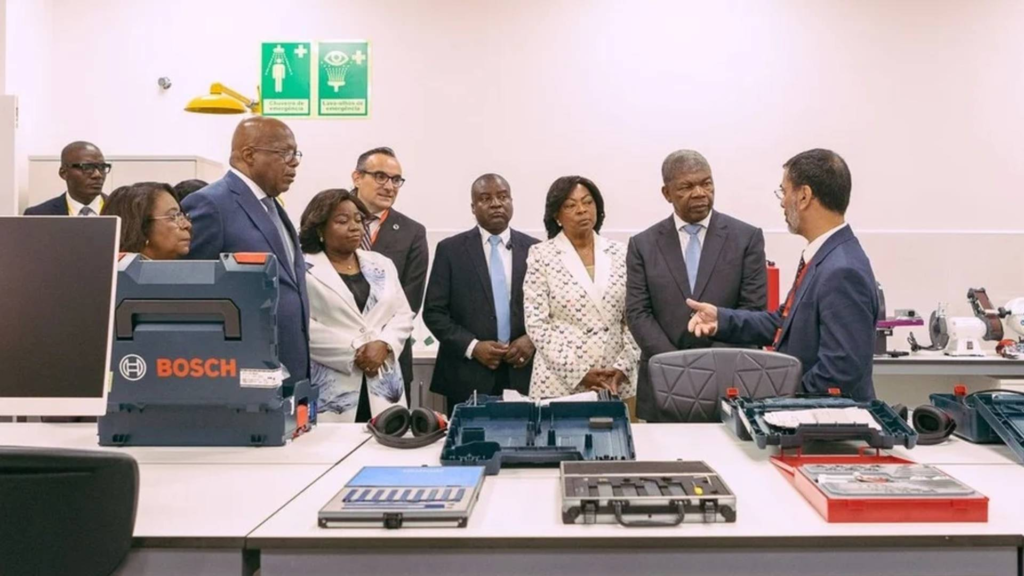
The ceremony was attended by President Lourenço, First Lady Ana Dias Lourenço, and senior Angolan officials, who toured the park’s facilities alongside Bank representatives, the African Development Bank said.