
Editor’s note: African-Startups is a sister publication of EU-Startups, bringing trusted coverage of startups, venture capital, and innovation across Africa.
Rising Tide Africa (RTA), a women-led pan-African angel investment network, has committed up to $1 million to Ororo Waste Management Limited, a Nigerian used cooking oil (UCO) collector and exporter.
Ororo Waste received the first tranche of the corporate note on 16 September 2026. Further tranches may be funded until 16 December. Ororo Waste is Lagos State’s partner for institutional-scale UCO collection and export.
“Refiners in Europe don’t buy good intentions, they buy documented, ISCC-certified tonnes. Every litre we export is GPS-tracked and QR-coded from a collector’s drum to the export container, which is why we have built very committed relationships based on trust and reliability with the offtaker community, and why we’ve had zero quality rejections across thousands of tonnes exported. Rising Tide’s capital helps fund the unglamorous but necessary part: drums, trucks, hub storage, and the working-capital float that lets us pay a market woman in Alausa the same day she sells to us. We are very honoured to be in a position to deploy infrastructure that will offer dignified incomes to several hundred thousand women, at a minimum,” Ayo Banjo, Co-CEO of Ororo Waste Management Ltd.
Ororo Waste Management Limited is an ISCC-certified company that collects and exports used cooking oil on a large scale. They supply this oil as feedstock to global biofuel and sustainable aviation fuel markets.
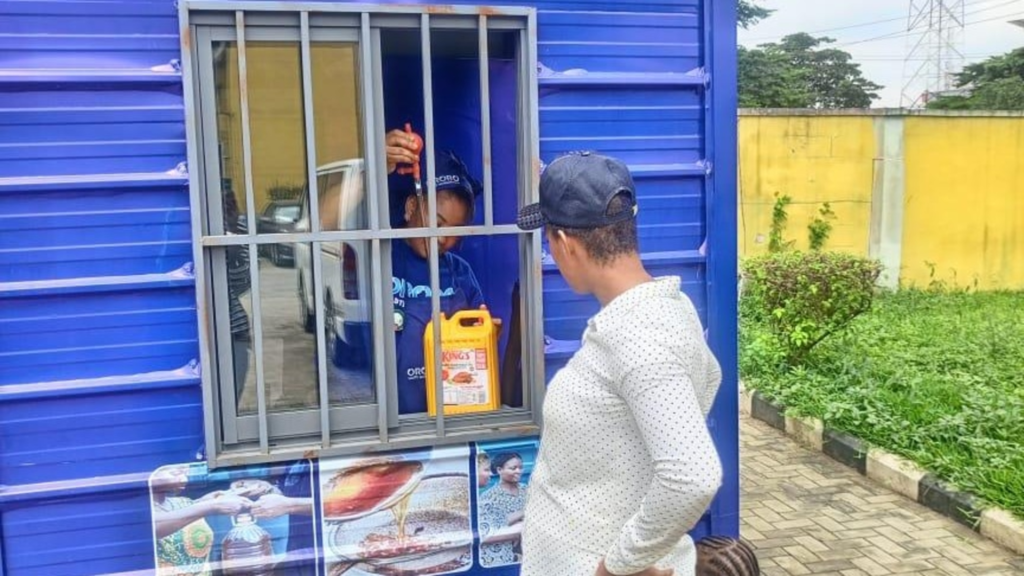
The company gathers used cooking oil from homes, markets, restaurants, and other institutions through their nationwide collection system. They provide complete traceability using a high-tech platform with GPS tracking, QR codes, and mobile payments before exporting to international buyers.
Currently, their ISCC EU certificate covers vegetable-origin used cooking oil and certain soapstock acid oil. They also work with other feedstocks like palm oil mill effluent, PFAD, and CNSL. Ororo has facilities in Lagos, Abuja, and Port Harcourt and has been operating for five years.
Nigeria produces an estimated 840,000 metric tons of used cooking oil a year, and more than 95% of it is not captured. Oil poured into drains can cause blockages and worsen local flooding, and some is reused unsafely in food.
Under the European Union’s revised Renewable Energy Directive (RED III), member states must meet either a 29% renewable energy share in transport or a 14.5% cut in transport fuel greenhouse gas intensity by 2030. This supports demand for certified waste-based feedstocks.
About 5,000 collectors are formally paid through the network today. Its current ISCC EU certificate covers vegetable-origin UCO and specified soapstock acid oil.
“Nigeria generates hundreds of thousands of tonnes of used cooking oil each year. Market women and waste pickers already do most of the collecting. Few have ever been paid fairly for that work, and even fewer at scale. Our capital helps fund the infrastructure that pays those women the same day, for a commodity that some of the world’s largest offtakers are already contracted to buy. This is gender-lens investing in practice: capital that follows the value women are already creating and helping them grow it,” Yemi Keri, co-founder of Rising Tide Africa.
Rising Tide Africa is a women-led angel investment network founded in 2016 by Yemi Keri. With over 122 members from seven countries, it connects African entrepreneurs with funding, customers, and expertise across three continents.
The network has invested in 39 early-stage companies in sectors like FinTech, HealthTech, and AgTech. Every investment comes with support from Rising Tide Africa’s MINE model: Mentoring, Investment, Networking, and Education. Members support founders from their first investment to the exit.
The funds will go towards expanding Ororo Waste from three collection hubs to more than 40 across Nigeria over the next five years. Proceeds will cover hub infrastructure, oil purchases from the collector network and hub running costs.
The two sides have also agreed a set of indicative five-year impact targets, which will be baselined this year and reported annually. By 2031 they aim to:
- Grow the paid collector network from about 5,000 to more than 200,000, with women making up at least half of new market-level collection points
- Raise certified UCO collection to more than 150,000 metric tons a year, about 18% of Nigeria’s estimated annual volume
- Expand to more than 40 collection hubs
Ororo Waste expects to finish a baseline income survey of its first group of onboarded collectors by the end of the year. It plans to report income and employment outcomes for participating women, waste pickers and youths, in line with frameworks such as the 2X Global Criteria.