
Editor’s note: African-Startups is a sister publication of EU-Startups, bringing trusted coverage of startups, venture capital, and innovation across Africa.
Creditchek has acquired Algosys, a Uganda-based core banking and lending management system, in a move that strengthens FinTech’s plans to expand its credit and lending infrastructure across East Africa.
The acquisition is part of Creditchek’s broader strategy to bring multiple components of the lending lifecycle onto a more connected infrastructure layer. These include credit bureau data, income verification, identity verification, loan management and collections.
Creditchek plans to integrate these services to provide financial institutions with a clearer understanding of borrowers and the tools needed for quicker, more informed lending decisions.
This approach aims to create a lending model that better reflects how people and businesses operate in each market, rather than just relying on traditional financial histories.
This is especially crucial in regions like Uganda and East Africa, where mobile money plays a vital role and much economic activity isn’t captured by standard banking data.
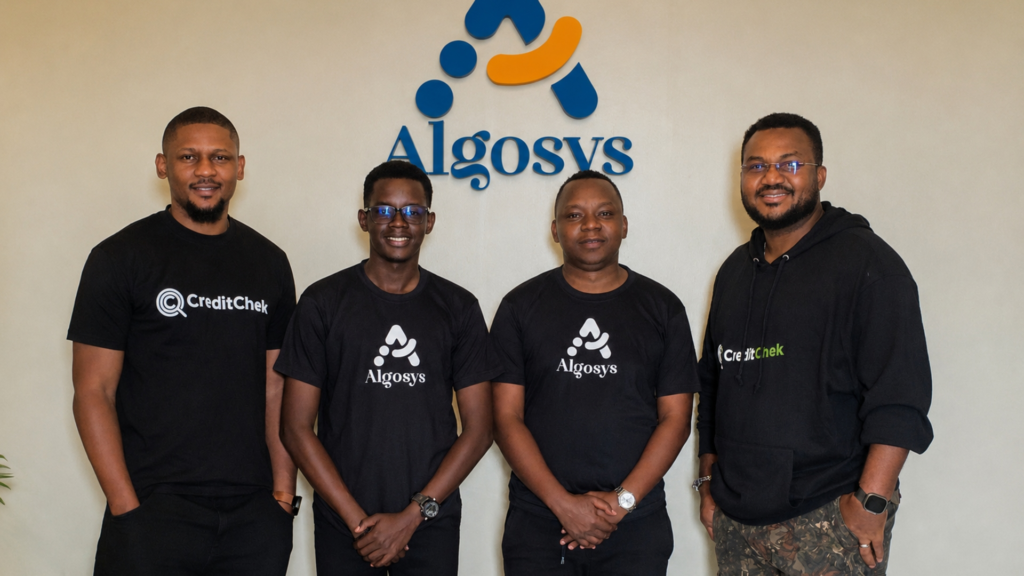
Following the acquisition, Algosys will operate as a subsidiary of Creditchek, marking Creditchek’s formal entry into Uganda.
“We are excited about what this next chapter means for Algosys,” said Innocent Bigega, Founder of Algosys. “Joining Creditchek gives Algosys access to a broader technology platform and resources while allowing us to continue building for the financial institutions we already serve. Together, we can build significantly more powerful infrastructure for lenders in Uganda and beyond.”
Founded in 2024 by Innocent Bigega and Simon Tayebwa, Algosys has already built significant traction in Uganda, serving 22 financial institutions, and facilitating over 10,000+ Sacco loans.
Many lenders currently depend on separate providers to manage different stages of the credit process. This fragmented approach can make it more difficult for financial institutions to access and connect the information needed to evaluate borrowers.
Creditchek aims to address this challenge by connecting these capabilities through a unified infrastructure layer. The company says this approach can help financial institutions make faster, more accurate and more inclusive credit decisions.
The acquisition of Algosys adds core banking and lending management capabilities to Creditchek’s offering, strengthening its ability to support institutions across the lending value chain.
Creditchek said the deal brings it closer to its planned East Africa expansion while strengthening its ability to develop localised credit and lending infrastructure for the markets it serves.
The announcement comes at a time when Uganda is working on a major economic transformation, aiming to grow its economy from about $50 billion to $500 billion by 2040.
The government’s Tenfold Growth Strategy highlights science, technology, and innovation, particularly in ICT and digital transformation, as essential for this growth.
“East Africa is not one market; every country has its own financial behaviour, data sources, regulatory environment and lending dynamics,” said Lionel Orishane, CTO and Co-founder of Creditchek. “Our approach is therefore not to take a Nigerian product and simply deploy it in Uganda. We want to build locally relevant infrastructure that understands each market while giving lenders access to a common technology layer across Africa.”
Creditchek is a credit assessment infrastructure designed to help financial institutions verify and evaluate the creditworthiness of consumers in Africa.
They are working to create the largest credit data infrastructure on the continent, which aims to enhance credit risk models for financial institutions around the world and improve access to better financial services for African consumers.
In June, the Nigerian company raised $600k to deepen its data coverage and expand its operations across East Africa, targeting banks, microfinance institutions, and fintech lenders grappling with fragmented and unreliable credit data.