

Editor’s note: African-Startups is a sister publication of EU-Startups, bringing trusted coverage of startups, venture capital, and innovation across Africa.
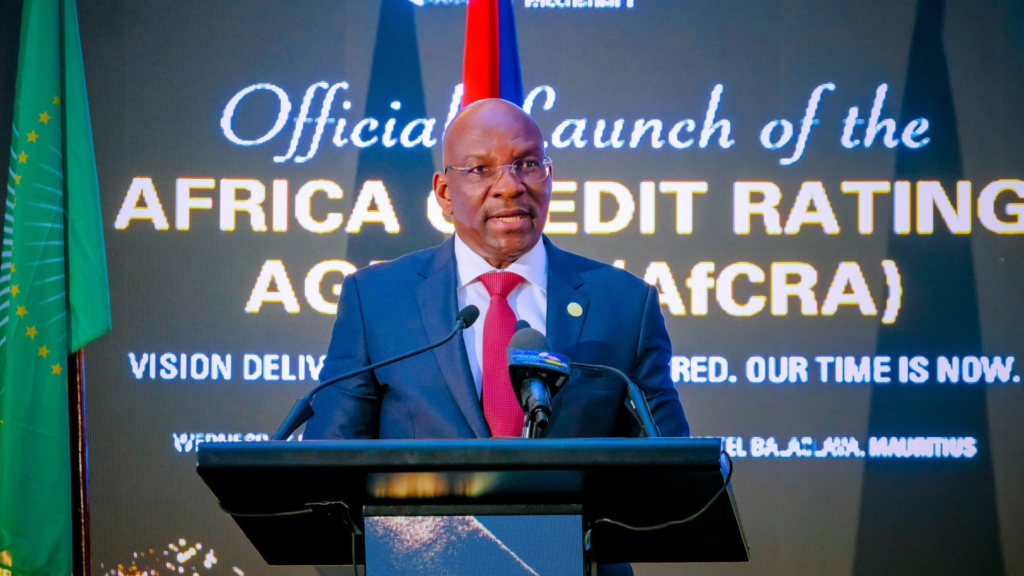
The Africa Credit Rating Agency (AfCRA) was officially launched in Mauritius. It is an African Union-mandated agency that will give independent credit assessments of African governments, regional governments and businesses.
The launch was attended by
- Chairperson of the African Union (AU) Commission, H.E. Mahmoud Ali Youssouf
- H.E. Dhananjay Ramful, Minister of Foreign Affairs, Regional Integration and International Trade of Mauritius
- H.E. Dr. Jyoti Jeetun, Minister of Financial Services and Economic Planning of Mauritius
- H.E. Nestor Ntahontuye, Prime Minister of the Republic of Burundi
- H.E. Ahunna Eziakonwa, United Nations Assistant Secretary-General and UN Special Adviser for Africa
- H.E. Denys Denya, Executive Vice President of the African Export-Import Bank (Afreximbank)
- Participation of members from the private sector and the diplomatic community
AfCRA is headquartered in Port Louis, and regional subsidiaries are planned. The agency is not meant to replace the global rating firms. It will offer an additional view that draws on African data and expertise. Its backers argue that ratings affect how much African countries pay to borrow.
AfCRA describes itself as “born in Africa, built for global markets”. It is an independent, private-sector-led credit rating and credit-intelligence agency headquartered in Mauritius and serving markets worldwide.
It is self-funded, and governments cannot own shares in it. The APRM oversaw its set-up, but AfCRA now operates on its own. The goal is to improve the understanding, measurement, and communication of creditworthiness.
This will help allocate capital more confidently and assess issuers based on all relevant evidence.
AfCRA’s approach is based on African insights but can be applied globally across different regions and issuer types.
They focus on three main principles: independent analysis and rating decisions, a scientific method that can be continually tested, and a global perspective in their services and partnerships. AfCRA will rate African governments, regional governments, companies and institutions
The AU Commission Chairperson called the launch a watershed moment in Africa’s economic history and a step towards financial sovereignty.
AU Commission Chairperson mentioned that AfCRA will contribute to building a more resilient financial framework in Africa. The agency will offer reliable and independent analysis of African economies and credit risks to both local and international investors.
He noted that credit ratings can affect borrowing costs. If these ratings do not accurately represent African conditions, countries may face higher costs, making it difficult to finance essential services like infrastructure, health, and education, especially amid existing debt pressures.
The AU Commission Chairperson also explained that AfCRA will help address information and analytical gaps by bringing African data, expertise and realities more fully into the assessment process.
It is not intended to replace existing international credit-rating agencies, shield borrowers from scrutiny or guarantee favourable ratings. Rather, it will provide an additional, independent and Africa-focused perspective to the market.
The Chairperson stressed that AfCRA’s credibility will depend on its independence, professionalism, transparency and adherence to internationally recognised standards. Its ratings must be evidence-based and free from political considerations and conflicts of interest.
At the same time, African countries must continue strengthening macroeconomic management, fiscal responsibility, transparency and debt sustainability.
H.E. Dr. Jyoti Jeetun described the launch as a landmark moment for Mauritius and Africa. She said Mauritius wants to be a platform that connects capital with African opportunities in areas such as infrastructure, renewable energy, telecoms, healthcare and agribusiness.
H.E. Amb. Marie-Antoinette Rose Quatre, CEO of the African Peer Review Mechanism (APRM), said credibility will be AfCRA’s greatest asset. She called on African governments to provide accurate and timely data.
Afreximbank, along with other members of the Alliance of African Multilateral Financial Institutions (AAMFI), believes African financial institutions should be evaluated based on their core strengths, performance, legal structures, purposes, and operations.
Additionally, Afreximbank believes that AfCRA will improve the current international and regional rating agencies. It aims to provide more credible analysis for investors and issuers and improve competition, transparency, and analysis in Africa’s credit markets.
Denys Denya, Senior Executive Vice President, Afreximbank, said, “The rating methodology AfCRA develops must recognise the uniqueness of our environment and its institutional structures. The Agency must set its own standards and not follow those set elsewhere — it must build a unique identity that conforms to an ‘African best practice.”
“Most importantly, AfCRA must set a new benchmark for the continent, maintain its independence, and remain wholly owned and controlled by Africans. We must all use it, and in return expect a complete assessment of where we (Africa) stand: the strengths the market has ignored, and the weaknesses we still need to fix,” Denya added.