Editor’s note: African-Startups is a sister publication of EU-Startups, bringing trusted coverage of startups, venture capital, and innovation across Africa.
Climate Fund Managers, a climate-focused investment manager, has secured approval for $140 million from the Green Climate Fund (GCF). The money will go to Climate Investor Three (CI3), its global fund for industrial decarbonisation, including green hydrogen infrastructure. The GCF Board approved the funding at its 46th meeting in Songdo, South Korea, held from 26 to 29 October 2026.
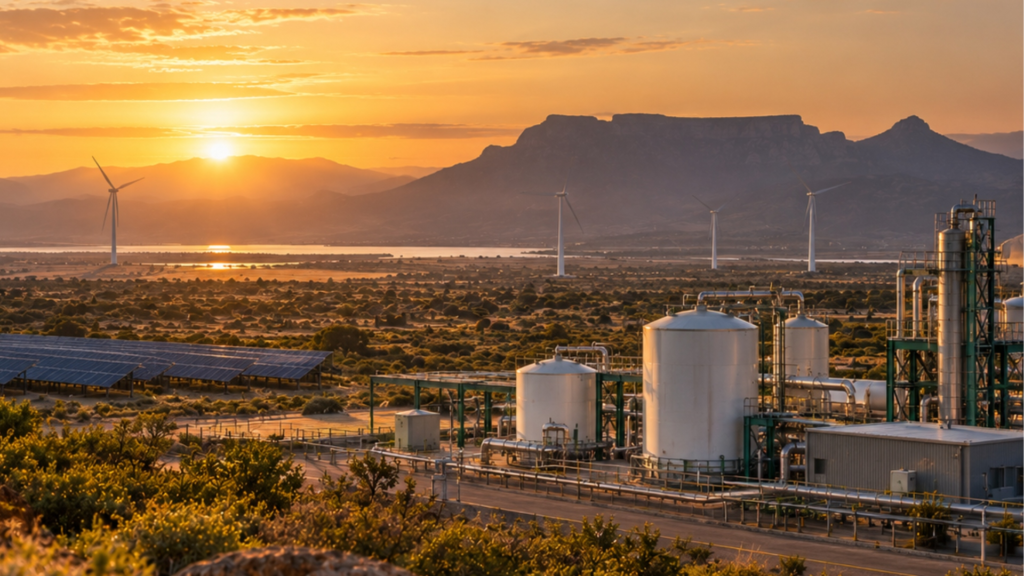
The funding will be used in South Africa and Namibia. Projects will cover green hydrogen production, products made from it such as green ammonia and green methanol, and cutting emissions in industries that are hard to clean up. CI3 is aiming to raise $1.2 billion in total.
The money comes through the Southern African Industrial Decarbonisation Facility (SIDF), GCF’s first platform for decarbonising industrial value chains in Africa. The Development Bank of Southern Africa (DBSA) is the accredited entity for the facility and will oversee the programme and report to GCF.
“Decarbonising heavy industry is essential to achieving global climate goals and presents a significant investment opportunity. Yet the scale and complexity of these projects create financing challenges, particularly during development and construction. By helping to mitigate these risks, GCF’s catalytic financing can attract institutional investment into commercially viable projects and support competitive, low-carbon industrial growth,” said Andrew Johnstone, Chief Executive Officer, Climate Fund Managers.
Climate Fund Managers was set up in 2015 and manages about $3 billion in assets across more than 50 active projects in Africa, Asia and Latin America. It invests in renewable energy, energy transition and green hydrogen, water, waste and maritime, and sustainable cities.
It is a joint venture between Dutch development bank FMO and Sanlam InfraWorks, part of South Africa’s Sanlam Group. The Green Climate Fund is the world’s climate fund for developing countries. It has committed more than USD 20 billion across 134 countries and serves the Paris Agreement.
“By deploying catalytic first-loss equity where risk is highest, the facility aims to unlock a target USD 1.2 billion programme across South Africa and Namibia, finance 30 to 40 projects, install about 1.52 GW of renewable energy and avoid an estimated 24.2 million tonnes of emissions,” said Catherine Koffman, Regional Director for Africa, Green Climate Fund.
The Green Climate Fund (GCF) is an international fund that helps developing countries address climate change by providing financial support.
It aims to mobilise large amounts of capital, strengthen local institutions, and facilitate major changes. GCF is the main financial entity for the United Nations Framework Convention on Climate Change (UNFCCC) and supports the goals of the 2015 Paris Agreement.
CI3 invests through two country funds run by Climate Fund Managers. SA-H2 Fund covers South Africa, and SDG Namibia One Fund covers Namibia. Of the $140 million, $84 million will go to the construction equity tranche of SA-H2.
The other $56 million will go to SDG Namibia One, split into $15 million for its development tranche and $41 million for its construction equity tranche. The development tranche funds early-stage project work, while the construction equity tranche provides equity to carry projects through construction.
“This approval is a strong vote of confidence in Southern Africa’s ability to decarbonise its industrial base while protecting growth and jobs. Our role is to derisk investment, crowd in private capital, and ensure the transition delivers development outcomes,” said Dr Phindile Masangane, Group Executive Programmes, Development Bank of Southern Africa.
In South Africa, SA-H2 has signed development funding agreements for Hive Hydrogen’s Coega green ammonia project and Green eFuels Producers’ wastewater-to-green-methanol facility. In Namibia, SDG Namibia One has signed agreements with the Hyphen green hydrogen project, HyIron’s Oshivela green iron project, the Zhero Molecules Walvis Bay green ammonia project, and the Dâures green fertiliser project.
“This commitment demonstrates how concessional climate finance can reduce risk and mobilise additional investment at scale, enabling projects that deliver both climate impact and sustainable economic growth,” said Jeroen Plag, Chief Investment Officer, Invest International.