
Editor’s note: African-Startups is a sister publication of EU-Startups, bringing trusted coverage of startups, venture capital, and innovation across Africa.
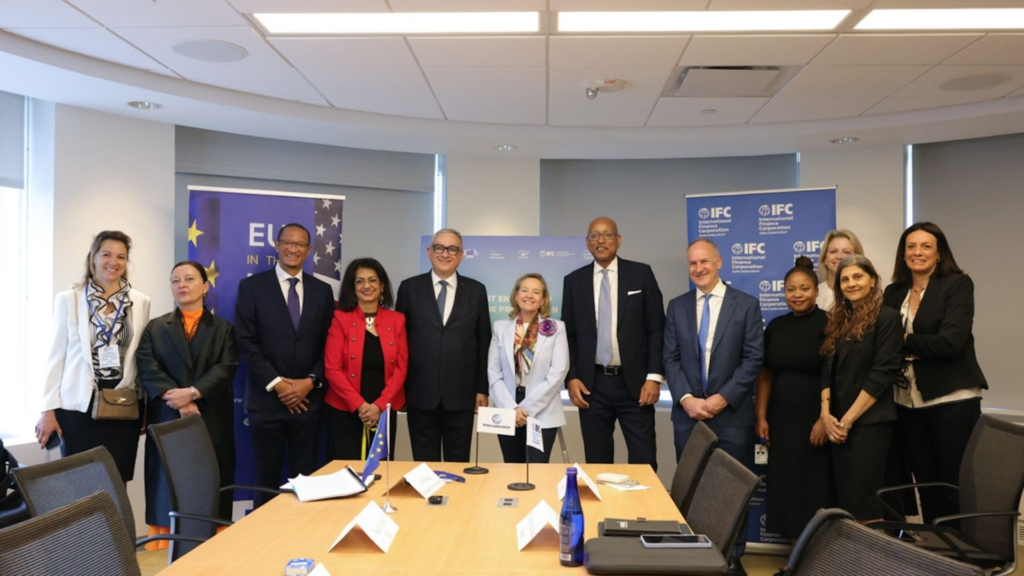
South Africa’s Biovac has secured funding from the European Investment Bank (EIB) Group, the European Commission and the International Finance Corporation (IFC) to develop Africa’s first end-to-end multi-vaccine manufacturing facility. The landmark investment will fundamentally reshape Africa’s vaccine self-reliance and health security.
As part of the funding, Biovac will receive a $88 million (€75 million) quasi-equity investment from the EIB Group and a $20 million senior loan from the IFC. The deal not only marks one of the most significant public-private financing efforts yet directed at the continent but also helps Africa achieve sovereign ability to manufacture vaccines. This critical need became starkly apparent during the COVID-19 pandemic.
“The European Investment Bank is very proud to support the production of vaccines in Africa, for Africa, in what will be the first facility of its kind on the continent,” said Nadia Calviño, President of the European Investment Bank.
Founded in 2003, Biovac is a partly state-owned pharmaceutical manufacturer aiming to revive South Africa’s vaccine manufacturing capabilities. Since its inception, the company has invested over $48 million (R800 million) in infrastructure and skills development at its manufacturing facilities in Cape Town. It has delivered more than 450 million vaccine doses across Southern Africa and has worked with Pfizer Inc and BioNtech SE to make COVID-19 inoculations.
The company will use the funding to build Africa’s first facility that can manufacture at scale. The new facility is expected to be completed by 2028 and will initially produce the oral cholera vaccine and later expand to include vaccines for polio (IPV), pneumonia (PCV), and meningitis (MenX). Once operational, it will have the capacity to manufacture up to 30–40 million doses annually, addressing approximately 40% of the global cholera vaccine supply gap.
“This will save lives: protecting millions of children from serious illnesses, and equipping scientists and health workers to safeguard their own communities. It shows how Europe is translating global partnerships into real benefits for people on the ground,” Calviño added.
Vaccines produced at the facility will be supplied to regional markets through procurement channels, including UNICEF and Gavi, the Vaccine Alliance. A joint statement adds that around 50% of the manufacturing equipment for the new facility will be sourced from European suppliers, and the project will create more than 340 skilled jobs and 7,000 indirect jobs.
Morena Makhoana, Chief Executive Officer of Biovac, said, “We are proud to partner with the European Commission, EIB Group and IFC on this transformative greenfield project – a state-of-the-art multi-vaccine facility in Africa. Expanding local vaccine development and end-to-end manufacturing on African soil for global supply has always been Biovac’s vision, and this funding enables us to accelerate it.
“The new facility will ensure a reliable supply of life-saving vaccines for Africa and expand our role in building skills, advancing technology transfer and driving vaccine innovation that will benefit generations to come. This milestone would not have been possible without the unwavering support of our international partners, and we are truly grateful and excited to lead the way in strengthening Africa’s vaccine self-reliance.”
The EIB Group’s quasi-equity investment, a form of long-term, flexible capital designed to share risk while supporting growth, is backed by the European Commission’s EFSD+ guarantee, part of a $31.46 billion (€26.7 billion) guarantee envelope supporting EIB lending outside the EU for the period 2021–2027.
The funding announced for Biovac is provided under the Human Development Accelerator (HDX) guarantee programme, an initiative backed by the European Commission and implemented by the EIB Group in partnership with the Gates Foundation. The project also contributes to the Team Europe initiative on Manufacturing and Access to Vaccines, Medicines and Health Technologies in Africa (MAV+), which forms part of the EU’s Global Gateway strategy.
“We are using our guarantee under the Human Development Accelerator to unlock private and multilateral investment in a facility that will produce up to 40 million vaccine doses a year, address 40% of the global cholera supply gap and create more than 340 skilled jobs. That is health sovereignty combined with real development impact,” said Jozef Síkela, EU Commissioner for International Partnerships.